Dearest Tracey: A letter from Mom
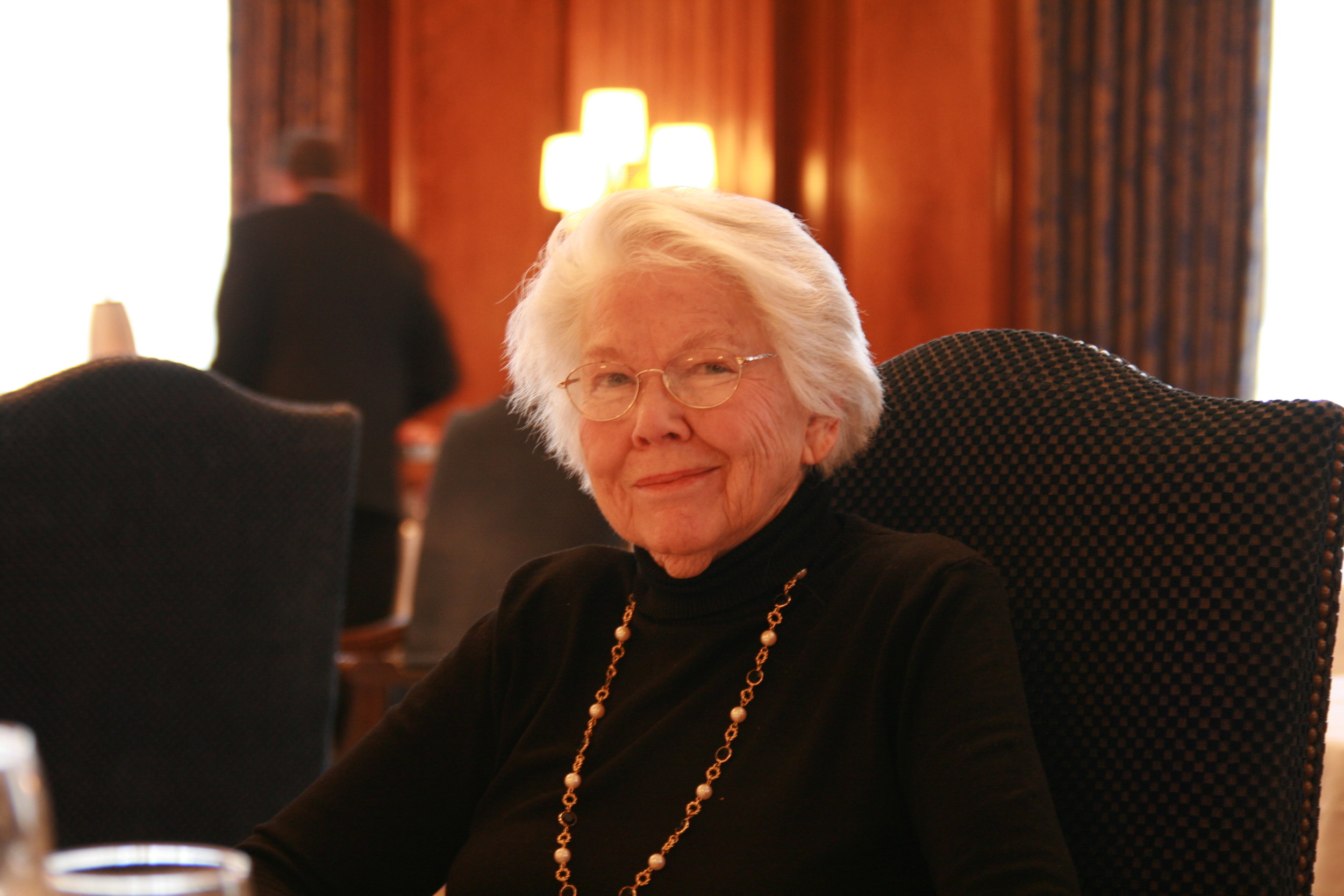
Many of you know that my mother lived and died with dementia. I learned a lot from being her daughter. She was a tough, determined, brilliant, beautiful, self-made woman who lived and died with grace and grit. In April 2017, nearly two and one-half years after her death, Mom wrote me a letter that I want to share with you today.
But first, let me explain.
Shortly after I was diagnosed with FTD, I attended my beloved colleague group for the last time. At our annual gathering, we always studied with a scholar. That year, gathering in Santa Fe, the scholar was Kayleen Asbo, a renowned storyteller, mythologist and depth psychologist. The topic was Dante’s Divine Comedy. In an interactive presentation that included art, music, psychology, mythology, religion, literature and history, we walked (actually galloped) through this epic poem. It was amazing and exhausting.
According to Dr. Asbo, Dante’s masterpiece is a story of revelation, remembrance, and reconciliation and exploration of love, loss and longing. This 14th-century poet provides us with a model of what to do with personal and collective grief.
During the first session, we were introduced to Dante’s spirit guides to help navigate and interpret his journey through the inferno, purgatory and paradise: Virgil, Beatrice and Bernard of Clarivaux. Dr. Asbo asked us to identify our guides. My list included a couple of mentors, a few friends, a therapist, a spiritual director, and my mother.
At the end of our time together, we were invited to take some quiet, reflective time and write a letter to ourselves from one of our guides, an ancestor, a person of wisdom. We were to begin with the phrase, “What I want you to know is….”
By this point in the conference, I was a mess. Exploring Dante’s story surfaced a lot of the love, loss and longing I was feeling as I began my journey with dementia. I didn’t really want to write a letter to myself. I just wanted to feel sorry for myself. But I sat down with my computer and began to write. Blinded by tears, I wrote a letter from my mother, which was odd, because my mother rarely wrote letters, at least not to me. At the end of our assigned time, I closed the document.
Later that afternoon, on the high road to Taos, one of my dearest friends suggested that we share our letters. I agreed. He had written a letter from his father. After reading it, I asked: “Is this what your father would really say to you?” He replied: “It’s what I wish he would say to me.” Aspiration and realty - two sides of the same coin.
He then read my letter, and with tears in his eyes, he said, “Wow. This is amazing. She really spoke to you. Aren’t you lucky.”
I decided I should read the letter since I couldn’t recall what it said. It was amazing. She really did speak to me. I am lucky. In fact, I am blessed by such a good guide.
So, while it is a very intimate letter, in honor of Mother’s Day, I have decided to share it with you.
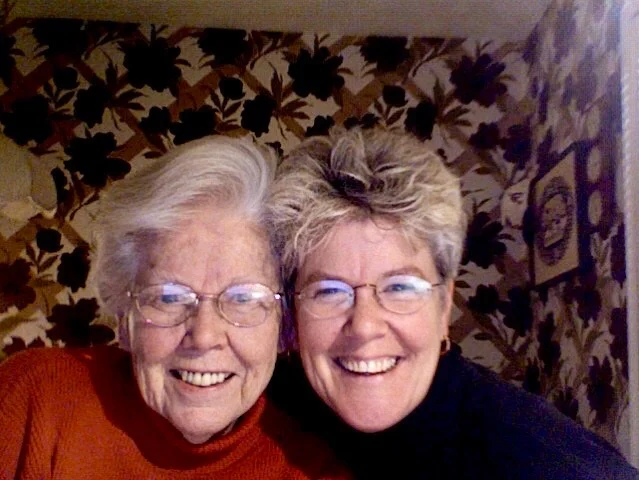
Dearest Tracey,
I haven't written you many letters over the years, but I'm writing to you now. I've heard the news of your diagnosis. I'm so very sorry that you've inherited the family illness. It's not much of a legacy to leave with you. I wish we had talked about it some before I died. I wish that I had gotten all the testing that you've had so that we both might have gotten a better understanding of this disease. Isn't it coincidental; I always wanted to be a brain surgeon, and we both ended up with brain disease.
It's a sad thing to lose your ability to think and speak. I know how frustrated I got at the beginning, but it does get easier as time passes and the disease progresses. And then there comes the time when you know it's over and you want to go home. I'm glad you were there for me then. I'm grateful that you honored my wishes as you did. I do wish that there was an easier way to die with dignity. May it be so for you.
I miss you. I miss not having spent enough time with you as an adult. I enjoyed your companionship, and I loved getting to know Emily. Please give her my affection. As you walk through this time, don't be afraid - no harm will come to you.
There will be good that comes out of it. May it be so. Know that I'll be watching over you, and when the time comes, I'll welcome you home with a big hug.
Love,
Mom
Those of you who are fortunate to have living mothers, make sure you ask them to share their wisdom with you. And those of you whose mothers have died — what messages would they have for you from the realms of eternity? Maybe you should invite them to write you a letter and find out.
And to all the mothers reading this blog, Happy Mother’s Day! What story or message can you share that your loved ones might really need to hear someday?
60 Minutes | Tracey & Emily to be featured on May 5

The episode of 60 Minutes that Emily and I recorded earlier this year was just announced for Sunday, May 5 at 7:00 p.m. Click here to view the episode preview featuring another family affected by this disease.
Press Release from The Association for Frontotemporal Degeneration, May 3, 2019 — 60 Minutes will introduce millions of television viewers to frontotemporal degeneration (FTD), the most common dementia for people under 60, in a segment scheduled to air on Sunday, May 5.
Reporter Bill Whitaker spoke with persons living with FTD, their care partners, and FTD experts for his report, entitled "The Cruelest Disease You've Never Heard Of: Frontotemporal Dementia."
The Association for Frontotemporal Degeneration (AFTD), the country's leading organization focused exclusively on FTD, provided 60 Minutes producers with background information on the disease as they prepared their story.
FTD differs from more Alzheimer's in that it does not primarily affect memory. Rather, it causes irreversible progressive change to an individual's personality, behavior, movement or language.
FTD "robs us of the very essence of our humanity, of who we are," Dr. Bruce Miller of the University of California San Francisco tells Whitaker in the piece. Dr. Miller is a member of the AFTD Medical Advisory Council.
FTD tends to occur earlier in life, when people are typically more concerned with raising a family and advancing their careers than coping with dementia. To highlight this reality of FTD, the piece will profile Amy Johnson, a mother of four young children whose husband Mark was diagnosed with behavioral variant FTD in early 2018.
There are no approved treatments for FTD, nor is there a cure.
AFTD helped to connect 60 Minutes with Amy, Dr. Miller, and The Very Rev. Tracey Lind, who is living with the primary progressive aphasia form of FTD.
"We are grateful to all who shared their story with 60 Minutes, just as we are grateful for everyone in our community who share their stories every day to bring awareness of this disease," said AFTD CEO Susan L-J Dickinson. "The more widely known FTD becomes, the sooner we can realize a world with compassionate care, effective support, and a future free of FTD."
AFTD works to raise awareness of FTD, provides help for families affected, and promotes research targeting viable treatments and a cure.
60 Minutes airs on CBS.
SOURCE The Association for Frontotemporal Degeneration
THE UNEXPECTED GIFT OF HUMBLE SERVICE
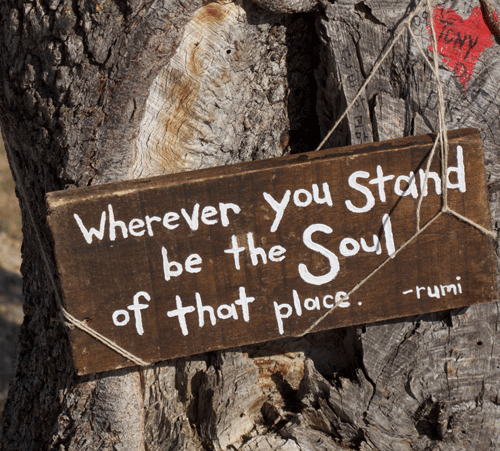
Thus says the Lord:
Do not remember the former things,
or consider the things of old
I am about to do a new thing;
now it springs forth, do you not perceive it?
Isaiah 43.19
Isaiah’s words are true, so true. God is always doing a new thing in our lives, even when we don’t perceive it. I’m living proof, and I’m grateful to all of the caring friends and generous strangers that have helped Emily and me make sense of our new reality — a life complicated by dementia.
I’m discovering that since I can’t return to the past, and since I can’t predict or control the future, I have to live in the here-and-now. And when I live in the moment, I’m fairly content and calm. Thus, I’m finally coming to understand why Jesus said, “Do not worry about tomorrow, for tomorrow will bring worries of its own.”
I also think that’s why, in the Gospel readings leading up to Holy Week and Easter, Jesus affirmed Mary’s decision to wipe his feet with an extremely valuable ointment. She seemed to understand the virtue and value of being present to the moment. This act was particularly notable when we consider how dusty and dirty Jesus’ sandal-clad feet must have been. He then went on to wash the feet of his disciples, an extraordinary act of servanthood and hospitality. It’s possible, even, that Jesus washed Mary’s feet in return, based on what we know about Jesus’ equal treatment of men and women.
During Holy Week, Christians everywhere participate in ritual foot washing as part of their Maundy Thursday celebrations, commemorating the last supper and following Jesus’ example of generous and humble service.
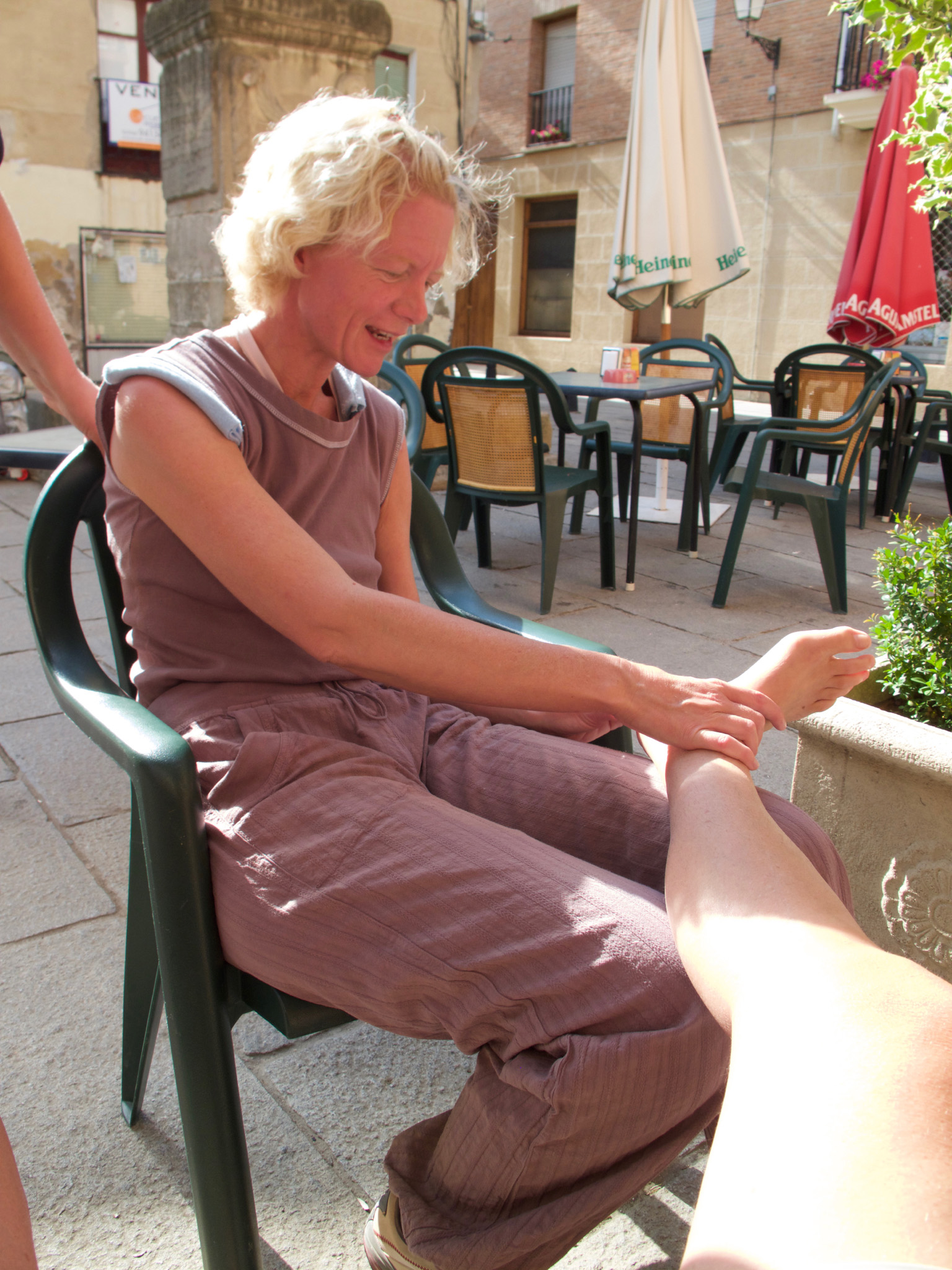
In 2009, Emily and I walked the Camino de Santiago together. I’ll never forget the woman we met along the road, who was walking at a very fast pace (as she had a limited amount of time to finish her journey) but stopped and tended to my blistered and bruised feet, massaging them with a rich, healing balm, caring for me just as Mary did for Jesus.
Over the past two years, such acts of humble service and kindness have become an unexpected gift of living and traveling with dementia. The physical therapist in L.A. who voluntarily spent two and a half hours teaching me how to safely navigate stairs and maintain my strength as the disease progresses. The person who made special arrangements so I will always have a place to swim laps. Friends and strangers who send books, share articles and include us on their prayer lists. Even the airline staff who respond with patience and compassion when I become anxious and overwhelmed in busy airports.
What if each one of us decided to treat each other as precious gifts, seeking to serve one another humbly, recognizing that each of us is a manifestation of God’s Spirit and an integral part of Christ’s Body?
What a grand celebration life would be.
Like Moses, Saying Yes to Our Sacred Tasks

The Altar
Last September, Emily said, “Tracey, we’re staying in Cleveland for the long haul, because that’s where our friends are.” She was right. This past Friday, one day before we left for a 24-hour preaching trip to NYC, our tribe brought their vans, trailers, SUVs, hybrid vehicles and spare blankets, moving all of our most prized and valuable possessions — art, light, music, and plant life — into our new home. It took them 60 minutes.
With grateful hearts and tired bodies, Emily and I took an early morning flight to New York, ate lunch, checked into the hotel, sat down to catch our breath, and then promptly fell asleep for 3 hours.
In the span of one weekend, all of the spiritual milestones in my life had converged. While moving into a home with dementia-friendly retirement potential, I was scheduled to preach in the city and cathedral where I was ordained. The same day, back in Cleveland, my successor, Bernard J. Owens, was being installed as the twelfth Dean of Trinity Cathedral — a new beginning for the church community where Emily and I met, fell in love, and served with joy for nearly two decades.
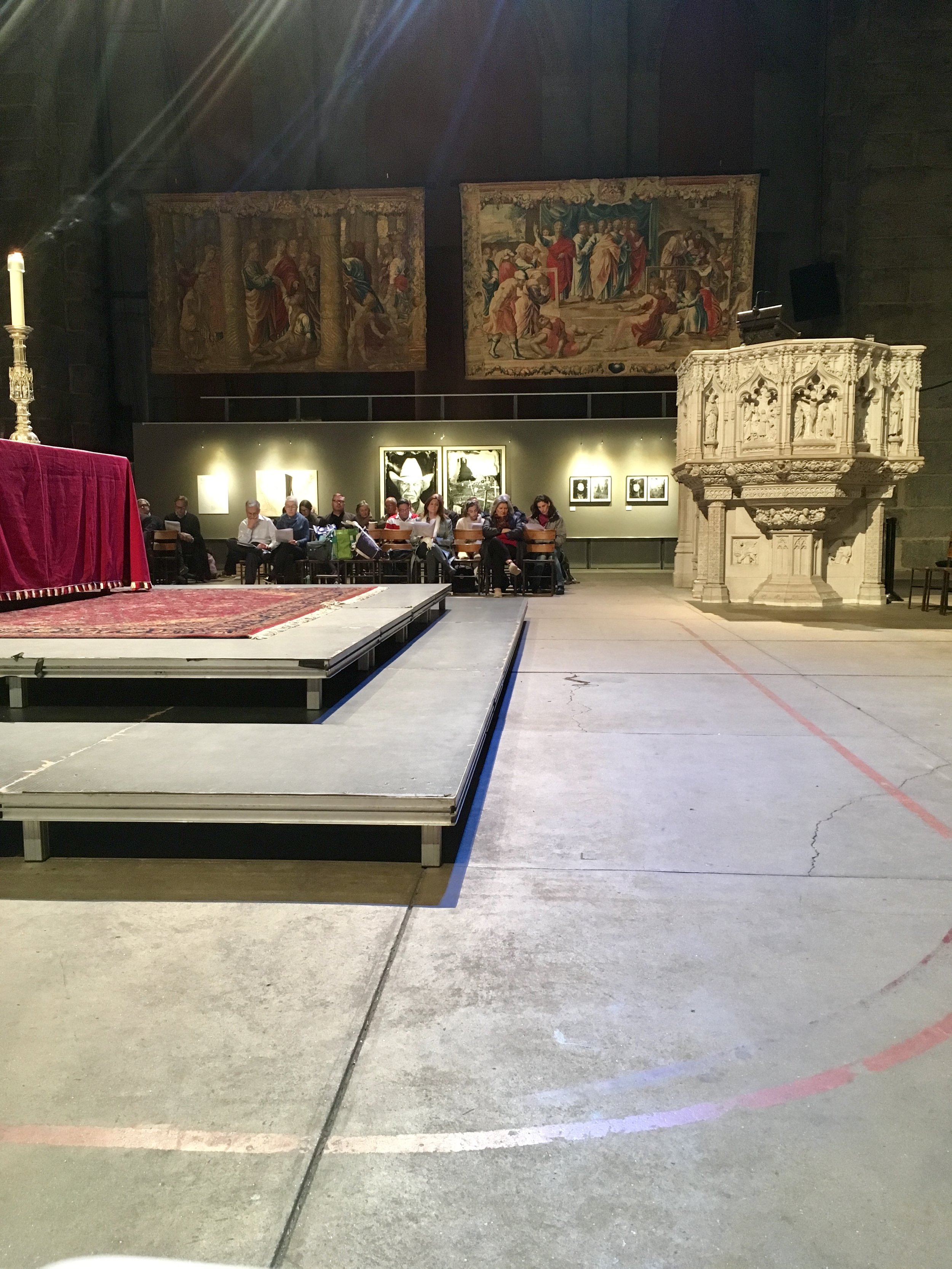
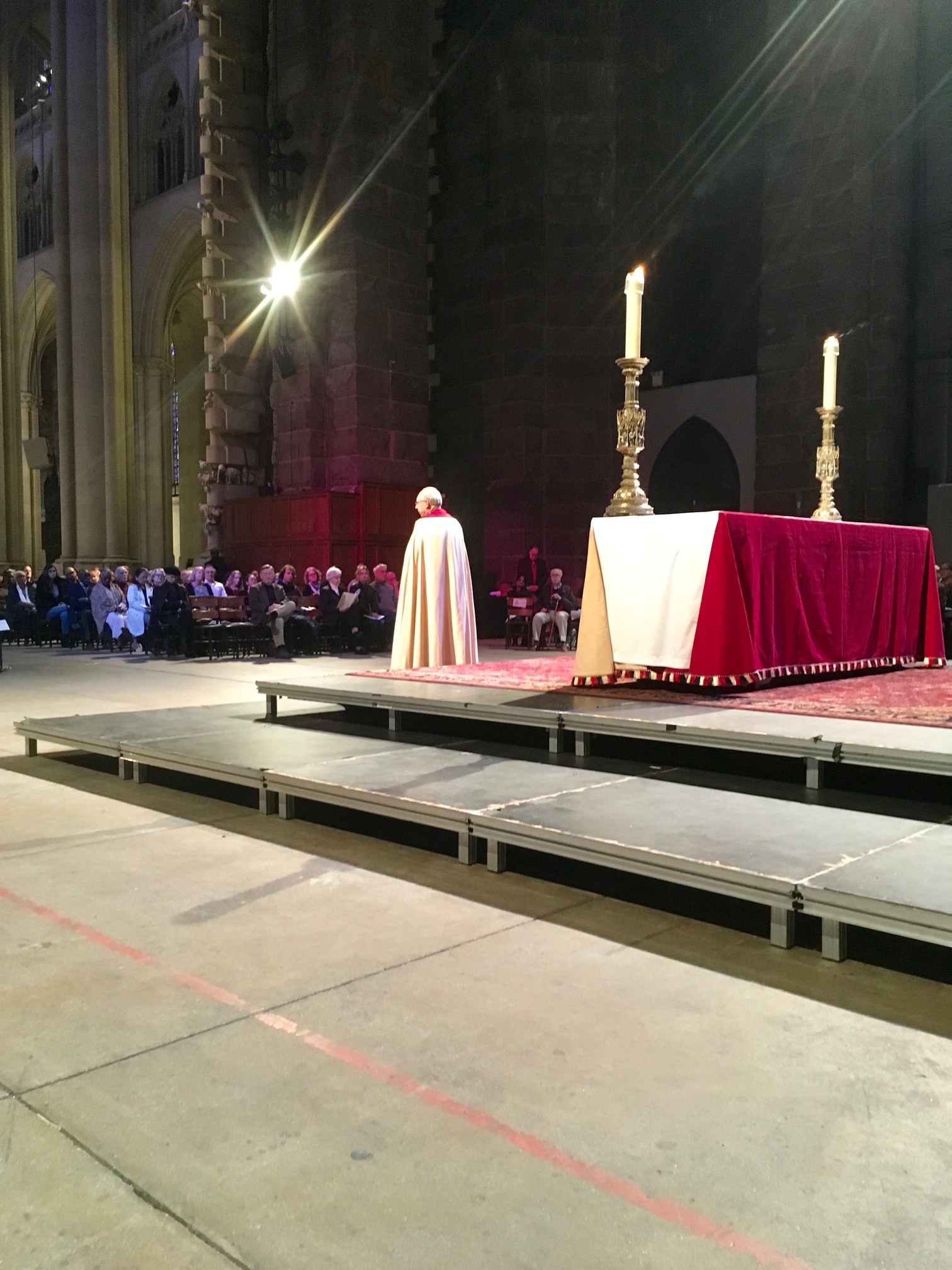
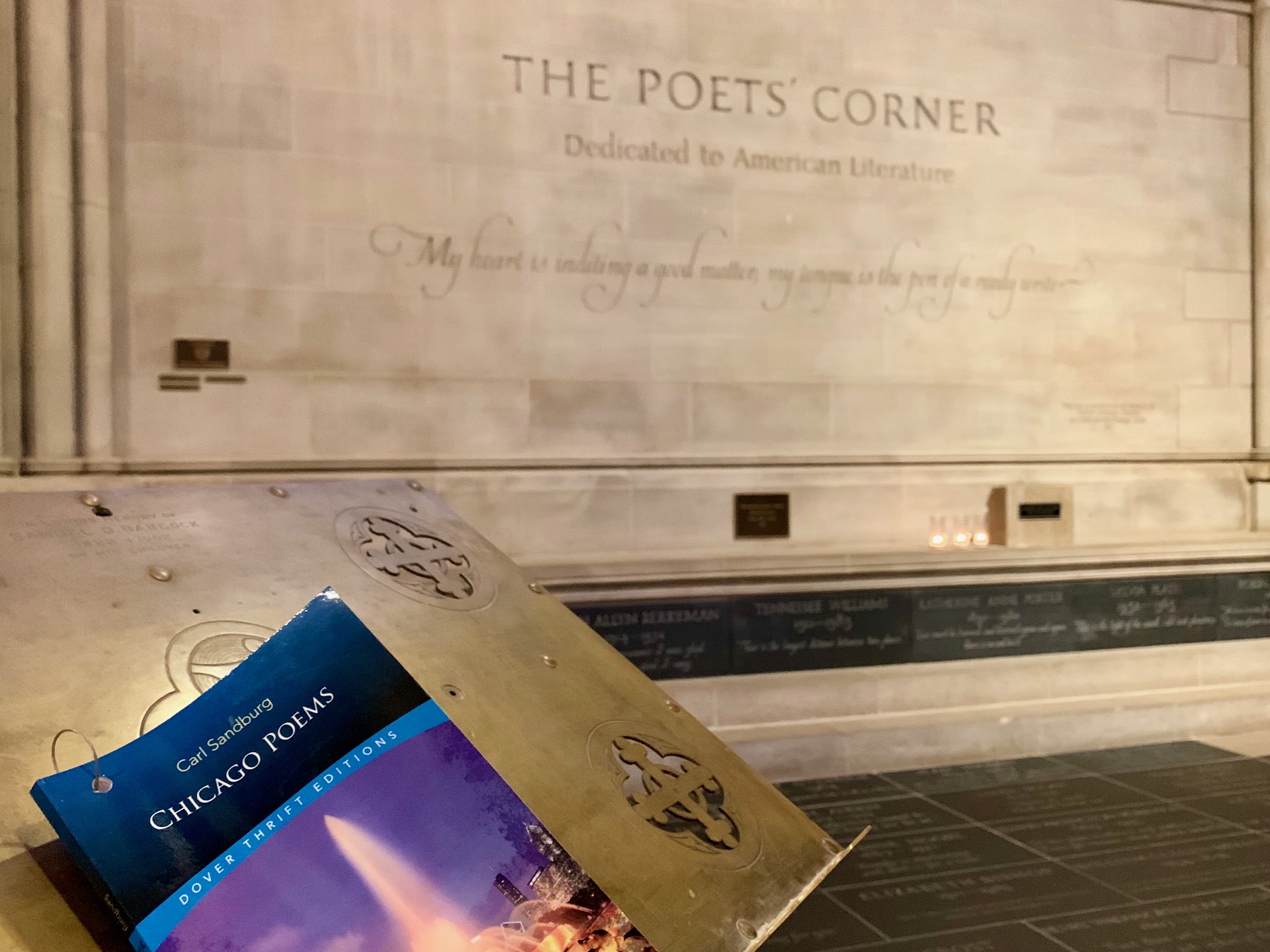
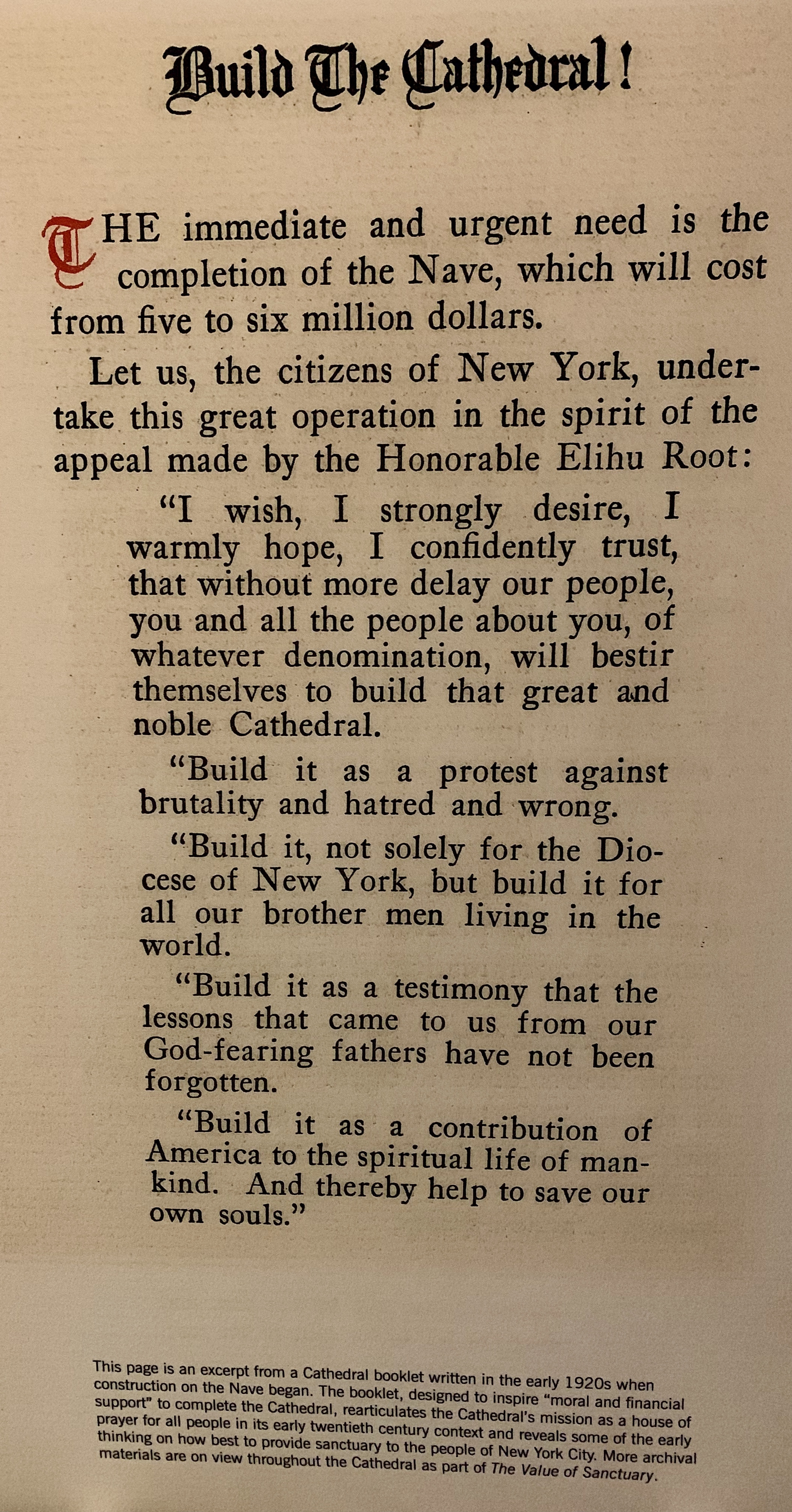
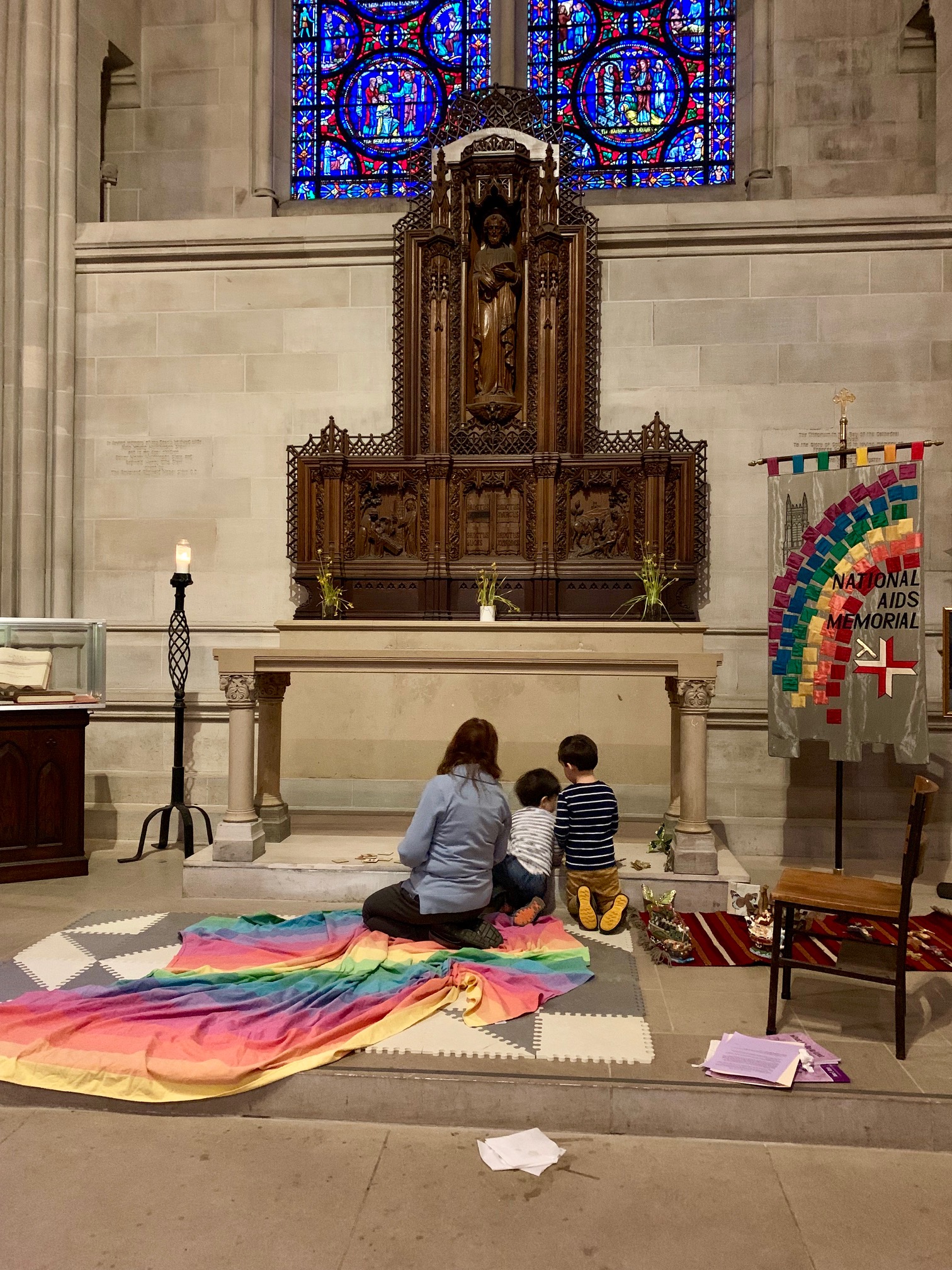
It seems fitting that the lectionary for my sermon that Sunday was the story of Moses’ encounter at the burning bush, aptly described in David Whyte’s poem “The Opening of Eyes,” below.
That day I saw beneath dark clouds
the passing light over the water
and I heard the voice of the world speak out,
I knew then, as I had before
life is no passing memory of what has been
nor the remaining pages in a great book
waiting to be read.
It is the opening of eyes long closed.
It is the vision of far off things
seen for the silence they hold.
It is the heart after years
of secret conversing
speaking out loud in the clear air.
It is Moses in the desert
fallen to his knees before the lit bush.
It is the man throwing away his shoes
as if to enter heaven
and finding himself astonished,
opened at last,
fallen in love with solid ground
— David Whyte from Songs for Coming Home
©1984 Many Rivers Press
The Moses story – a profound epic tale – is about being interrupted by God: encountering the Holy, called by name, given a sacred task, feeling unsure and unworthy, receiving reassurance, and in the end, saying yes.
Moses’ story features all the elements of adventure: exile and exodus; challenge and resistance; excitement and boredom; mistakes and missteps; punishment and reward; courage and fear; anger and compassion; frustration and laughter; atonement, forgiveness, and, ultimately, salvation.
What happened to Moses can happen to each of us – if we are willing, we can find ourselves astonished and opened by the mystery of the divine, as we discover and fall in love with the ground of our being.
Yes, each person’s story is different. Everyone’s call is unique. But, when God interrupts our lives, we stand on holy ground, sometimes (and sometimes not) aware of the angels all around.
God has profoundly interrupted my life twice.
The first time was when I met God in a McDonald’s on the corner of 42nd and Madison Avenue in New York City. It happened 35 years ago, and yet I can remember that moment like it was yesterday. The Spirit of God gently tapped me on the shoulder, as with the flat of a sword, and claimed me as a beloved child of God.
This divine voice called me by name, confronted me with my own issues and private wounds, contradicted my dearly held theological beliefs, answered my questions, challenged me to claim my vocation, and reassured me when I protested. Like Moses, I said yes. I accepted the divine invitation I had received, and I ran with the dream of God for my life through some three decades of parochial and cathedral ministry.
The second interruption occurred on Election Day 2016, when Emily and I sat in a doctor’s office and heard the words: “Tracey, you have early stage dementia, probably caused by Frontotemporal Degeneration.”
Life, as I knew it, imploded in that doctor’s office. My diagnosis ripped apart the fabric of our lives, disrupted the core of my vocation, and confronted the essence of my identity. It then drove us into the wilderness of dementia, disability, and discernment. Like many who receive a devastating diagnosis, we sequenced for many months through the Kubler Ross stages of grief - over and over again - like a washing machine cycle - until eventually, I realized that the diagnosis of FTD granted me what the poet Denise Levertov describes as an “honor and a task.”
In what felt like an eternity to me, but a millisecond to God, “I saw beneath the dark clouds [of my diagnosis] the passing light over the water, and I heard the voice of the world speak out...” It was calling me to find the meaning, grace, gifts, and wisdom from a life impacted by dementia, to speak about it from the inside out, to become, in the words of my fellow pilgrim Greg O’Brien, “a torchbearer to curse the darkness of dementia and shine a light on its path.”
Like David Whyte,
“I knew then, as I had before
life is no passing memory of what has been
nor the remaining pages in a great book
waiting to be read.
It is the vision of far off things
seen for the silence they hold.
It is the heart…speaking out loud in the clear air.”
I have no doubt that I am losing the life I’ve always known, but I’m also certain that I am finding a new one.
Dante opens The Divine Comedy with these words: “In the middle of the journey of my life, I came to myself, in a dark wood, wherein the direct way was lost. It is a hard thing to speak of, how wild, harsh and impenetrable that wood was, so that thinking of it recreates the fear. It is scarcely less bitter than death: but, in order to tell of the good that I found there, I must tell of the other things I saw there.”
He then takes us on an excruciating tour of the Inferno, Purgatory, and Paradise. In his final vision, Dante sees “the beam of the highest light.” He emerges from “the dark wood, wherein the direct way was lost” to the dazzling light of supreme love and truth, a burning bush that was not consumed.
When I deny the reality of the disease, grieve the lost aspects of my old identity, and resist the emerging aspects of the new me, I get tied up in knots; but when I accept what has died, let go of what has been lost, and celebrate what is being reborn, when I try to love and care for the person who is emerging, I start discovering surprising gifts and strengths, a different kind of balance and a new way of living in the world.
— Tracey
[1]Holy Ground – transcript from the eCourse, “Gratefulness: Life as a Wholehearted Journey, with David Whyte & Br. David Steindl-Rast” – Session Five.
Let's Talk About Invisible Need

Photo credit Colleen Dodson Baker: Emily and Tracey during a recent speaking tour around Southern California
Words do not come to me as easily as they once did, especially when my brain is tired from travel. The recovery takes a little longer, and I am learning to listen when my body and brain tell me I need to rest. One of the ways I hope to continue advocating as my abilities change is to uplift the work of other people who have helped, challenged or inspired me, such as the Rev. Dale Susan Edmonds, founder of Talk-Early-Talk-Often.com and a Huffington Post contributor. Her article “Alzheimer’s in God’s House: The Empty Pew” echoes the conversations Emily and I have had with countless church leaders throughout the country over the past year.
“Frequently, the needs and concerns of family caregivers go unrecognized and unaddressed in local congregations. Not because the clergy and congregants are suddenly uncaring, but because they don’t know and don’t understand what’s going on behind closed doors.
A common locus of invisible need is found in the families struggling with Alzheimer’s. One single person may have the disease, but the impact is felt by an entire family. And the ripples alter an entire faith community.”
Emily and I both feel that speaking to clergy has been one of the most valuable and rewarding parts of our journey. As dementia progresses, people disappear to the sidelines. But in communities of faith, we have to stay in connection with families affected by this disease. More than prayer, they need our active presence.
This means we need to come close to that which we fear.
I can relate to the way Rev. Edmonds describes the multiplication of losses that happen for families coping with dementia: “Loss of partner, loss of shared decision-maker, loss of roles/functions in the household, loss of shared memories and humorous stories, loss of identity as the person no longer remembers themselves, his or her children or the spouse.” And I appreciate that she challenges us to answer the question, “So how does a congregation learn to deal with Alzheimer’s in a constructive and supportive way?” Read Rev. Edmonds’ article for specific ways faith communities can serve families struggling with this disease.
We’ve got to talk about it.