Swimming in Gratitude: Thanksgiving 2017
I finally got to swim. After locating the pool, getting there during open hours, purchasing the required bathing cap and necessary swim goggles, figuring out the rules about changing and showering, I slid into the water and began the familiar and comforting ritual of swimming laps. I had forgotten how good it feels for my body, brain and spirit.
One of my spiritual practices is to say my prayers as I swim. I usually start with the Lord’s Prayer, over and over again. And then, I pray for those who are on my mind. And then, about midway into my swim, I express my gratitude.
As we approach Thanksgiving, I have so much for which to be grateful. In no particular order:
- Countless family, friends, colleagues, parishioners, neighbours, and strangers who have offered so much kindness and compassion during the past year;
- Doctors who diagnosed and helped me come to terms with dementia;
- The opportunity to find meaning in my new chapter of living of with dementia and to share my learnings as a preacher and teacher;
- The hospitality of Dean Lucinda Laird and The American Cathedral in Paris, and our little apartment 62 steps up in a bell tower;
- The generosity of Bishop Pierre Whalen and the Convocation of Episcopal Churches in Europe that have made possible my first preaching and teaching tour;
- Good Cause Creative for communications and social media support (and sponsors who provided the funding to make this possible);
- Judson Retirement Services’ commitment to provide the highest quality of care for people living with dementia;
- The people of Trinity Cathedral in Cleveland, Ohio who called me to serve as priest and pastor for the past 17 years;
- The people of St. James the Fisherman in Wellfleet, Massachusetts who renew my spirit each summer; and last, but most importantly,
- Emily Ingalls with whom I promised to share life “come hell or high water”
The Taoist teaches us to take nothing for granted but rather express our gratitude for all things, instructing: when we drink water, we are to remember its source. In a strange way, I am grateful for dementia that has opened my eyes and ears to the world, to myself and to God in a new way.
Thanksgiving will be different this year.
We are in a country that doesn’t celebrate this American holiday. I won’t watch the Macy’s Thanksgiving Day Parade or the National Dog Show with the smell of a roasting turkey. But I will be grateful for all of my blessings.
And I intend to keep swimming. - Tracey
Stuck in Paris
Dear Friends,
It’s not all bread, wine and roses in Paris.
As I have talked about in recent sermons and shared here on the blog, people often don’t believe that I have early-stage dementia. They don’t see anything wrong. Usually, I like it that way. I don’t want pity or special treatment. However, it is real, and some days are more challenging than others.
Today was a good example of a bad day in my reality. We got up early with the intention of going swimming. I’ve discovered that Paris has a number of very clean, indoor, public swimming pools. They are well-heated, some say overheated.

I decided that swimming in warm water would be very good for one of newest symptoms I am experiencing: the tightening and stiffening of my limbs and extremities. Some days, it turns my walking into a clumsy shuffle. It often keeps me up at night as I am frequently awakened with an uncontrollable twitching and jerking in my body. And when I’m at all stressed or tired, my legs ache so much that I can barely walk. I sometimes have to tell them to move, and they resist.
Off we went looking for the swimming pool. While we were able to purchase our required swim caps, we were not successful in finding the pool.
So we started walking home. We had to walk through the Arc de Triomphe. My legs were already aching after a bad night. When we reached the crowded intersections surrounding this beautiful city monument, I froze. My legs simply wouldn’t move. They were like cement. And there were all these people walking toward me. I felt like I was stuck in a oncoming human wave and I couldn’t navigate the current.

Emily might have sensed it or seen the look in my face (I guess I get a look when I’m distressed). She took hold of my hand and guided me through the several intersections we had to cross. As we walked along, I realized I was crying. It was one of those moments when the truth wasn’t "setting me free,” but rather, was presenting a harsh reality in the here-and-now. All I wanted to do was go swimming and feel the warmth of the water. The pool is now closed for the day. Maybe we’ll find it tomorrow.

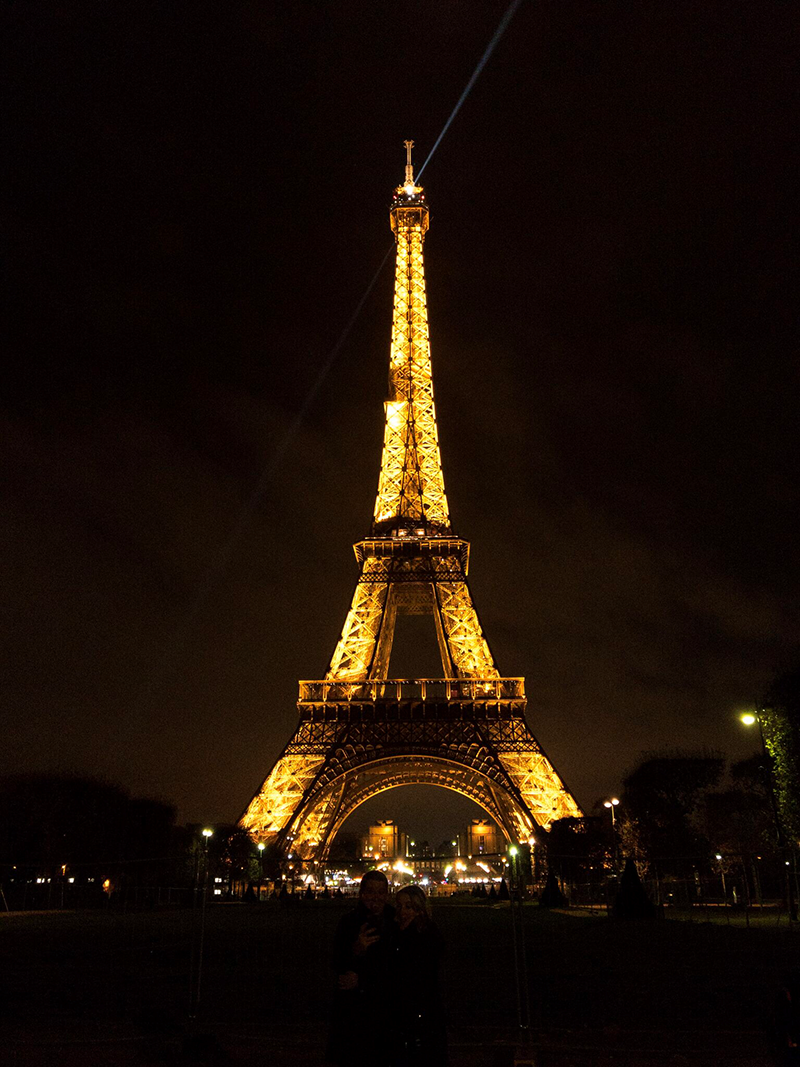
After a leg massage from Emily and 2.5 hour nap, went back out to take a few photos of Le Arc de Triumph.
Today's misadventures brought to mind this funny poster I saw in the Marais. I’d like to wave my arms and have the crowds part, so that I can pass and get to the swimming pool.
I also have a feeling that once I find the pool, I won’t be able to figure out the rules of swimming in Paris. C'est la vie. - Tracey

Humility: A work in progress
Humility. A work in progress. - Summer 2017
Excerpts from a sermon preached at St. Paul within the Walls – Rome, Italy November 5, 2017
“All who exalt themselves will be humbled, and all who humble themselves will be exalted.” (Matthew 23:12)
I am learning about humility the hard way. For thirty years, I wore a uniform identifying my profession, usually had the best seat in church, often held a place of honor at banquets, was greeted with respect in the marketplace, and people called me “Rev.” or “Dean.”
Then one day, it was over. My tenure was history. The newspaper articles announcing my retirement were in the archives. I had bid farewell to my congregation and staff. My books and vestments were packed. I was without title, office and church keys. My calendar was empty, except for a disconcerting number of medical appointments, and my email inbox was reduced to advertisements and list serve messages.
When that first Sunday rolled around, I didn’t know what to do with myself. I woke up late, read the paper, and drank a third cup of coffee. I thought about going to a local church, but instead, I sat in bed and wrote a poem, in which I described myself as “a little boat untethered on a big lake [with] wind and waves pushing away from familiar shore.” Like many newly retired and unemployed people, I didn’t know who I was without my title and position.
It’s hard losing your status and place in society. Those of you who have lost jobs and spouses understand. It’s hard losing the identity you’ve taken for granted. Those of you who are immigrants and refugees know what I’m talking about. And, it’s hard – really hard – losing your strengths. Those of you who are struggling with health issues know of what I speak.
One year later, I’m discovering a new way of living in the world and with it an expanded sense of curiosity, empathy, patience and compassion, especially for those who with physical, mental or emotional challenges. I’m trying to let go of my need for status…and the more I let go it, the more I experience the fullness of life of which Jesus speaks.
So today, I invite you to consider: What are your fringes, titles and seats of honor? How do you parade your status and importance around the piazza? What do you know of your less visible self that waits for what God has in store for your life? How are you falling into the fullness of your life, and if you’re not, how high are you going to climb before you trip and fall?

The Rev. Austin Rios, Rector of St. Paul's Within the Walls in Rome, Italy
The virtue of humility is a complicated thing. We all would be wise to give it consideration before it demands our attention. But when it does, and it will, if we accept it, this curse will become a gift and will lead us into the fullness of life.
Learning to Love the Face in the Mirror

Tracey Lind, Cape Cod - Summer 2017
An excerpt from a sermon preached at St. James Episcopal Church - Florence, Italy
October 29, 2017
Leviticus 19:1-2, 15-18 • Matthew 22:34-46
One of the primary spiritual lessons I’m learning from a life interrupted by dementia is about love. At my ordination, Bishop Paul Moore said that all we needed to do was love them, especially the ones we don’t like. It was the best advice I was ever given.
Love is the primary test of what scripture defines as “being holy” – that is, living in right relationship with God, self, and others. If you want to be holy – as God is holy, as Jesus calls us to be holy – then you not only have to love God, you have to love others; and, in order to love others, you have to love yourself.
A lot of what I’ve been learning this past year is about self-love, loving the person I saw in that restroom mirror, the person whose face I didn’t recognize. I’m coming to realize that while I work hard to love others, especially those whom I don’t like, I’ve not been very good at loving those aspects of me that I don’t like. Sure, I have loved my strengths and talents. But guess what? With dementia, those strengths and talents are rapidly diminishing.
Jesus talks a lot about dying to oneself and being reborn, or losing life and finding it anew. Wisdom teacher Richard Rohr calls this process “falling upward” into the second half of life and discovering its fullness.
The first half of life is about building a container called identity and filling it with family, friends, education, career, hobbies and stuff. We also fill the first half of life container with our successes and failures, accomplishments and defeats.
The second half of life happens when the contents of our identity containers are spilled out and refined, and the container – worn, dirty, chipped and perhaps even broken and re-glued – is refilled. Now with all of its contraction and paradox, pain and joy, we hold our containers in what Rohr calls luminous gravitas, a bright sadness. It's when we become who we really are meant to be and start learning to love our real self.
One year after my diagnosis, I realize that I’m falling upward – into the fullness of life –
with dementia. When I deny the reality of the disease, grieve the lost aspects of my old identity, and resist the emerging aspects of the new me, I get tied up in knots. But when I accept what has died and celebrate what is being reborn, when I try to love the person that is emerging, I start discovering surprising gifts and strengths, a different kind of balance and a new way of living in the world.
One of the gifts that I’m discovering is an expanded sense of curiosity, empathy and patience. As I am learning to love myself with dementia, I am learning how to love others more, especially for those who have physical, mental or emotional challenges. And you can only love another when you’ve learned how to love the parts of yourself that you don’t like.
The Truth Will Set You Free

A selection from Tracey's Oct. 22 forum at the American Cathedral, Paris
Have you ever had the experience of not being believed? Denial is a fairly common reaction to extraordinary news. Do we believe the child who whispers the pain of abuse, the employee who brings charges of harassment, or the immigrant who pleads for refugee status. We often miss the truth because we can’t or refuse to believe the messenger and/or the message.
When I was a college student, I witnessed a bank robbery, and nobody believed me. When I was a seminarian, I met God in a McDonald’s Restaurant and I’m pretty sure that few people believed me. When I tell people I have early onset dementia, they don’t believe me. In fact, I often don’t believe me either. Some days, I feel like my old self and question the diagnosis. But then something will happen to remind me that yes, I really have early stage dementia.
I’m learning that this is a common challenge for people with early onset. Because it’s such a devastating diagnosis, those around us want to comfort us by denying it and saying, “Oh we all forget things, we all get confused, we all can’t recall our best friend’s name or the day of the week.” Please don’t do that.
Don’t tell someone that their reality seems to be “an idle tale.” It’s not comforting; it’s actually hurtful and harmful, for it makes us prone to an unhealthy denial. Moreover, it all about stereotyping – that a person with dementia is someone who is helpless, unable to think, move and communicate with others. I believe that if we (and those around us) are honest about our situation (whatever it is), the truth will set us free to explore the fullness of life with it.

Lucinda Laird, my good friend and the Dean of the American Cathedral in Paris