Living Bread

Excerpts from a sermon preached on Aug. 12
St. James the Fisherman, Wellfleet, MA
The great chef and food critique James Beard once wrote, “Good bread is the most fundamentally satisfying of all foods; and good bread with fresh butter is the greatest of feasts.”
For different people, in different settings, bread takes on different meanings. To the chemist, it’s a formula; to the shopkeeper, a commodity. To the wine taster, bread is a cleanser of the pallet; to the farmer, a finished product. To the dieter, bread is something to control with too many calories; to a starving person, it’s the staff of life.
However you cut it, bread is the gift of God’s creation and the work of human hands. Throughout the ages, it’s come to mean life, love, nourishment, sustenance, and survival. As commonplace as it seems, bread remains one of the most powerful symbols of our humanity.
Jesus, a faithful, first-century Jew, understood the importance of bread. It was at the center of his vocation. In the Fourth Gospel, immediately following that miracle, Jesus made a bold claim: “I am the bread of life.”
Jesus took the staple of the human diet, the most basic form of human nourishment, and claimed it for himself. Not only did he claim the metaphor of bread, but he said that he was the kind of bread that would not spoil but would endure to eternal life. In doing so, Jesus, in essence, said: “I am that which can satisfy and nourish you forever.”
When I approach the Eucharistic table, I imagine Jesus saying: Eat this bread so that you may have life, and whenever you eat it, remember the life that I have given for you and the life that I have given to you. And not only that, but remember the love I have shared with you and the love that I expect you to share with others.
Though not her intention, the food writer M.F.K. Fisher once described the Eucharist pretty darn well: “Given honest flour, pure water, and a good fire, there is really only one more thing needed to make the best bread in the world, fit for the greatest gourmet ever born: and that is honest love.”
No one knows for certain what happens when the Divine presence of the Eucharist settles alongside our breakfast and morning coffee. But somehow, through a simple tasting of bread and sip of wine, God takes us into her love, and we become one with Christ and one another. And in our oneness, we are given the ability to reach out to our neighbors in love. And that can make more difference than we can imagine.
The Miracle of Faith

A guest post by Pam Turos
Faith. It’s not something I can easily explain to my agnostic husband or my friends and family who have been hurt and confused by the church in many different ways. I also believe in miracles. This isn’t something we talk openly about at my “Pantsuits and Prose” book club, where we intentionally dive into other tough topics and political conversations.
Because of my faith, I feel called to speak out against injustice, to show up at Black Lives Matter demonstrations, and to welcome immigrants and refugees into my home and community. My faith and social justice work are deeply spiritual and interdependent.
I have long struggled with how to explain this kind of faith to those who feel disconnected from its source. Whether I’m in a hilltop chapel in the woods of Cape Cod or a pew in Cleveland’s ornate, historic Trinity Cathedral, I make my way to church as often as possible because it connects me with the quiet voice inside that says I am a beloved child of God – and so is everyone else.
For years, I have struggled to describe my belief in the power of prayer to those who consider themselves spiritual but not religious. “If I pray for less traffic, that doesn’t change my morning commute. Prayer isn’t going to have any impact on the number of idiot drivers on the freeway.” True enough. But prayer changes me. It changes how I see the challenges I am faced with and how I view other people. It also makes me more likely to notice the opportunities and blessings that surround me, instead of the obstacles. A clear mind and spirit also increase the odds I will leave my house on time, which means I will reach “dead man’s curve” on I-90 before the inevitable morning slow down.
As a busy mother and business owner, prayer is central to the nurturing of my family and my business. Does prayer pay the bills? No, but it helps me find peace during tough times. Faith also opens my heart and mind to the helpers around me who have become a supportive tribe of generous friends, talented colleagues and rockstar clients – including the Very Rev. Tracey Lind.
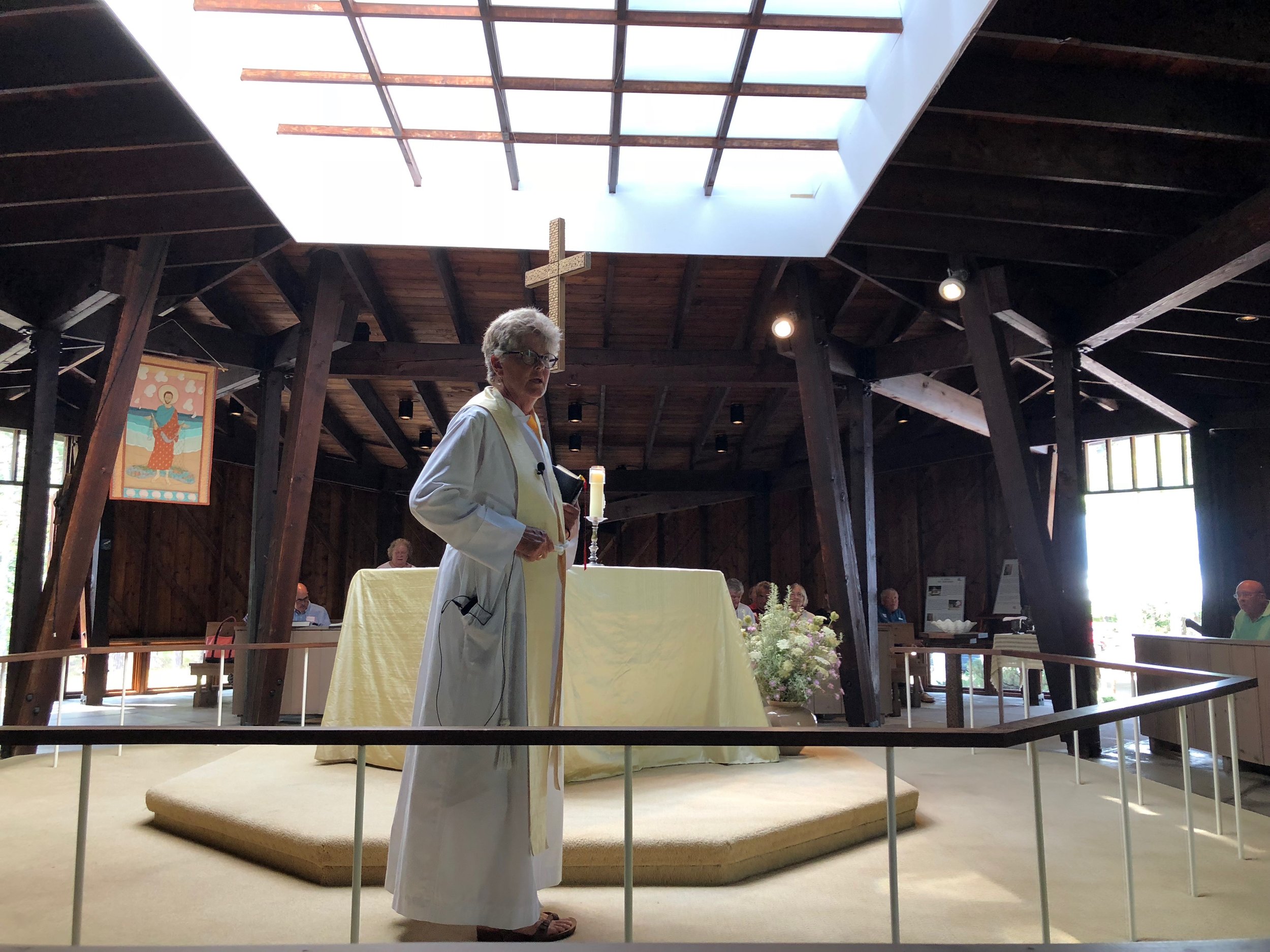
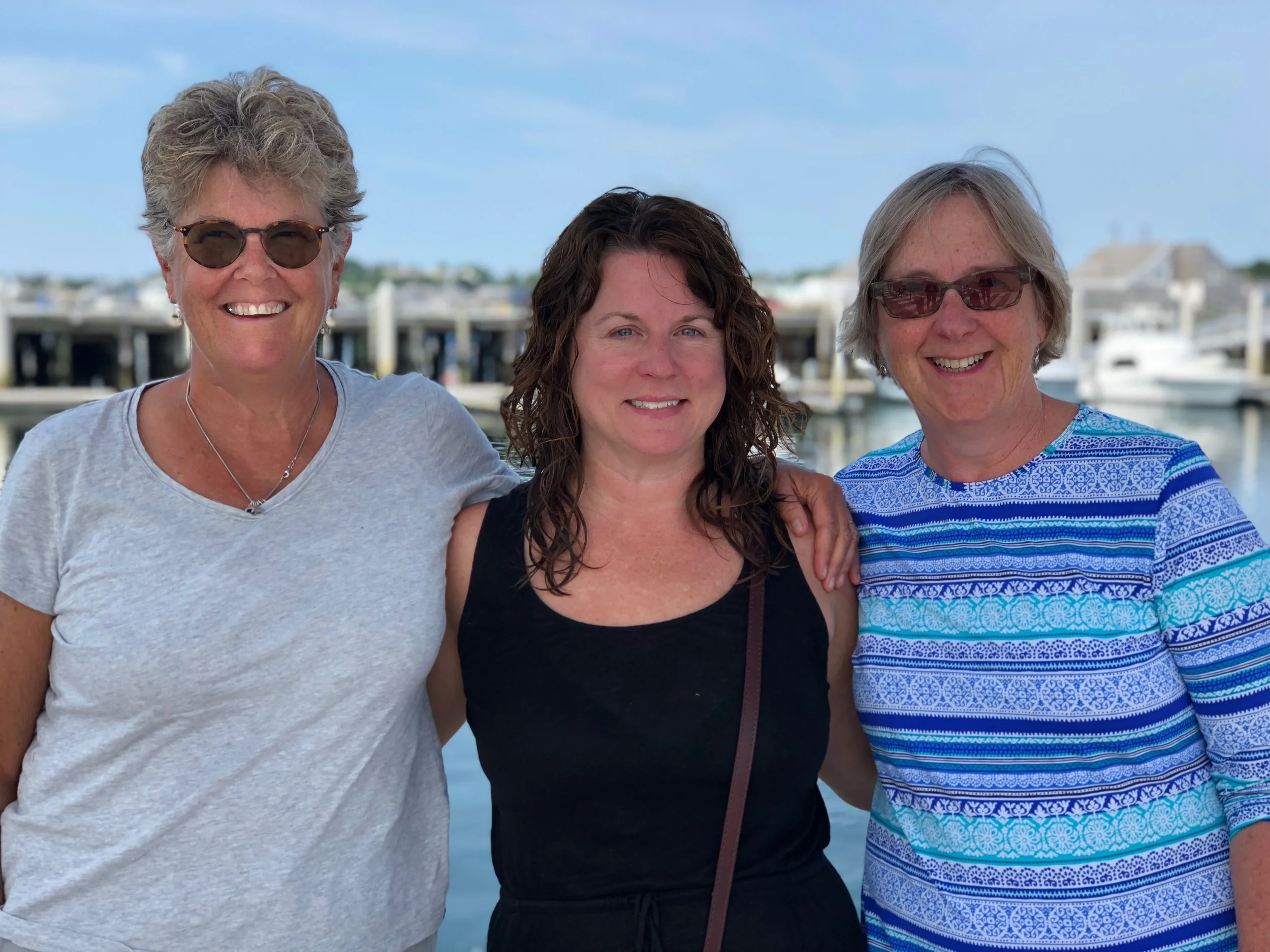
Last week, I was blessed to share several days in Wellfleet, MA with Tracey and Emily in their adopted summer community, where Tracey serves as the part-time Priest-in-Charge for The Chapel of St. James the Fisherman. We talked little about business; instead, my spirit is rich and refreshed from lazy freshwater swims surrounded by nature’s tree-lined cathedrals and quiet talks with God along the rocky shores and wooded trails of the Outer Cape.

As a perfect end to my visit, Tracey’s Sunday sermon included a powerful interpretation of the familiar New Testament scripture, John 6:1-21, in which Jesus feeds a crowd of 5,000 with only five loaves of bread and two small fish. Her description of Jesus as a community organizer resonated deeply with my belief that faith and human connection are integral parts of effective social justice leadership.
In her words, “I know that I’m reading into the text, but I think that when the loaves and fish were placed within the community, in the middle of the circle, people began to share what they had brought for lunch that day, for many, if not most, of these folks had not come empty-handed. Fruit, cheese, bread, cucumbers, olives, fish, and yes, wine, began to emerge from bags, baskets, and packs. There was enough food for a feast, a banquet. And of course, like all good potlucks, there were abundant leftovers, 12 baskets full.”
The miracle was in the sharing.
Tracey continued, “How often do we get trapped in the scarcity myth – our fear of not having or being enough? The Bible tells us that there is enough of what we need to survive, and even thrive, if we, and those around us, are willing to share what we have.”
Too often, we think the miracles of life are in the abundance – the fact that there was magically enough for everyone to eat. Personally, I’ve experienced this phenomenon with my Cleveland neighborhood’s Front Porch Wednesday events. Our casual, weekly summer get-togethers seem to grow and flourish in direct proportion to our faith that whatever we have to share will be enough – tables, chairs, food, drink and participants included.
Miracles occur when we open our hearts and minds to discover the blessings within each other and all around us — whether it’s right next door or in the face of a stranger beside us in a crowd. I believe that the same unwavering faith Jesus and the disciples used to open the lunch sacks and feed the masses can work miracles of connection and opportunity within our broken communities. That is my kind of faith. And it doesn’t require regular church attendance, guilty confessions or weekly tithing, just our mindful presence and loving, inclusive participation.



A Little Greatness

This past Sunday, the summer chapel I serve in Wellfleet, Massachusetts, honored its patron Saint James the Fisherman. The scripture reading appointed for the day was from the Gospel of Matthew (20:20-28). It’s the story of a mother bidding on behalf of her of sons - James and John - for a special role in Jesus’ kingdom.
She reminds me of parents that I’ve known, requesting special treatment for their children - like a position on the soccer team, a particular teacher, a preferred seat in the classroom, or even a job. This mother wanted her sons to be the first and second lieutenants in Jesus’ kingdom on earth. She displayed, on their behalf, what Dr. Martin Luther King, Jr. once referred to as “the drum major instinct.”
In a famous sermon delivered at Ebenezer Baptist Church in Atlanta on February 4, 1968, Dr. King reminded his congregation that before we condemn the mother of James and John too quickly for her selfish request, we should “look calmly and honestly at ourselves, and we will discover that we too have those same basic desires for recognition [and] importance…that same desire for attention, that same desire to be first.” According to Dr. King, we all have the drum major instinct.
The mother of James and John asks, seeks, and knocks on the door of glory. Jesus responds accordingly. You don’t know what you are asking. You haven’t understood a word I’ve said. Are your sons prepared to suffer and die for the cause?
Twentieth century American author Edward Dahlberg once wrote, “Ambition is a Dead Sea fruit, and the greatest peril to the soul is that one is likely to get precisely what he is seeking.” Although the drum major instinct lives in most of us, if it is not harnessed, it becomes dangerous. It can cause us to lie about who we are; it can make us believe we are somebody other than who we are; and it can lead to snobbish exclusivity and activities that are merely used to gain attention.
As Dr. King said in no uncertain terms, “The final great tragedy of the distorted personality is the fact that when one fails to harness this instinct, he ends up trying to push others down in order to push himself up. And whenever you do that, you engage in some of the most vicious activities. You will spread evil, vicious, lying gossip on people, because you are trying to pull them down in order to push yourself up.”
Unharnessed ambition is a great peril to both the soul and the public square. That’s why Jesus taught his disciples that whoever wishes to be a great leader must first be a servant.
You want to be great, or your want your kids to be great. Fine, anyone can be great. But first, one has to serve. And then, one has to pay the price of service. Perhaps we should be teaching our children and grandchildren about servanthood rather than greatness. Take that Mr. President.
- Tracey


Walking the Plumb Line

Excerpts from a sermon preached on July 15
Chapel of St. James the Fisherman, Wellfleet, MA
Speaking words that we might be tempted to negate, ignore or compromise, Amos – a farmer, a herdsman, and a dresser of sycamore trees – was called by God to afflict the rich, the powerful, and their chaplains with the razor-sharp plumb line of divine judgment.
During Amos’ lifetime, the economic elite was the ruling class. Comprising less than 3 percent of the population, they owned most of the land and controlled the vast majority of the wealth. They also possessed a body of cultural information so different from that of the peasantry, resulting in two distinct subcultures within the same society.
Through excessive land rent, unfair trade practices, exorbitant taxes, and violent control, the ruling class of Amos’ society literally waged war against the poor, and the religious leadership justified their behavior. Thus, Amos spoke vehemently to the rich and powerful, and to their clergy, cursing the establishment’s abandonment of the poor and needy and their betrayal of the outcast and oppressed.
Some 200 years later, John the Baptist, following in the footsteps of Amos and the Hebrew prophetic tradition, came forward to preach an equally radical, prophetic pronouncement against the rich and powerful. In particular, John condemned Herod, an ambitious and wealthy man who served as the chief political authority of Galilee during the time of Jesus. More interested in his own agenda than the emperor’s, and thumbing his nose at Israel’s religious laws, Herod was disliked by his Roman masters and hated by his Jewish subjects.
Although Herod had imprisoned John, scripture tells that he both “feared” this prophet and “liked to listen to him.” However, pride and arrogance eventually got the best of the governor; and at a birthday party, Herod delivered John's head on a platter to his seductive stepdaughter. Though the prophet was silenced, his prophetic imagination was not. For when Herod heard of Jesus, he said, “John, whom I beheaded, has been raised.”
Both Amos and John the Baptist remind me of the many courageous women and men who have stood up, sat down, or taken a knee in the presence of power and authority, and have said “No more.” No more guns, war, or police violence; no more border walls, detention centers, workplace raids, or separation of families; no more poverty, injustice, or political deceit; no more dictators, tyrants or demagogues; and in the words of former presiding Episcopal bishop Edmond L. Browning, “no more outcasts.”
Although the prophets are often ignored, discounted, jailed and even killed in order that they may be silenced, their voices, words and messages are raised again and again. Even defenseless, unarmed, decapitated, dead men and women like Amos, John the Baptist, Jesus and their followers down through the ages come back to haunt the powerful of this world. Thus, the famous Civil War hymn sings, God’s "truth is marching on.”
Pondering the words of Amos and John, I couldn’t help but wonder: What would they have to say today?
- What would they say to the gun lobby and legislators who are beholden to the NRA?
- What words would they speak to the Secretary of Education about protecting the rights, ensuring the safety and providing a quality education for all our children?
- What would they say to the presidents of North and South Korea?
- What would they proclaim to the leaders of Israel and Palestine, and their supporters around the world?
- How would the prophets respond to the dismantling of our nation’s environmental protection laws?
- What might they declare to our President and Congress as they grapple with immigration reform and border security?
- What would they say about the state of America’s inner cities and urban neighborhoods?
- What would they say to our nation’s farmers and food producers?
- What wisdom would they offer the members of the Supreme Court as they wrestle with questions of choice, civil rights, and religious freedom?
- What would these prophets say to the faith community as we witness what’s happening to the most vulnerable in our nation and world?

I think the answer is clear. In the words of Micah, the prophets call us to “do justice, love kindness and walk humbly with God.” How we carry out this mandate – that’s where it gets complicated – in both ancient and modern times. And that’s where civil debate, discourse, protest, politics, journalism and action all come together to create a just and civil society.
In these troubling times, we need to heed the voices of the prophets, both those from the past and those in our midst. We need to allow their words to provoke and challenge us, washing over us like a waterfall, blowing over us like the rush of wind. And then we need to act.
I’m grateful the General Convention of the Episcopal Church seemed to hear and heed the voices of the prophets this past week as deputies and bishops wrestled with climate change, immigration reform, marriage equality, transgender rights, sexual misconduct, peace and justice in the Holy Land, gun violence, racial reconciliation, and evangelism. I do believe that Presiding Bishop Michael Curry’s call for the Episcopal Church to be fully engaged in the Jesus movement has taken hold.
Realizing that, “The arc of the moral universe is long, but it bends toward justice” (Dr. Martin Luther King, Jr.), I ask you: What’s one step you can take this week, however small, to bend that arc a little bit?
May we be able to bear words of truth, no matter how disconcerting, frightening, or offensive they may be, and may we walk their plumb line as we respond to the real challenges and opportunities set before us.
- Tracey
Have a Little Sympathy with Your Greeting

Emily shares her perspective this week:
A couple of months after Tracey stepped down from her job as dean of Trinity Cathedral, she was shopping at a local mall when a woman approached her and said, “Tracey, I know you don’t remember people, but I’m sure you will remember me!” Tracey asked the woman to remind her, and after a minute or so of fishing around in the conversation, she was able to recall some details — which church service the woman usually attended, where she worked, etc., and they caught up for a few minutes. Tracey felt embarrassed and awkward and was relieved when she could politely go on her way. No doubt her parishioner was disappointed at not being remembered.
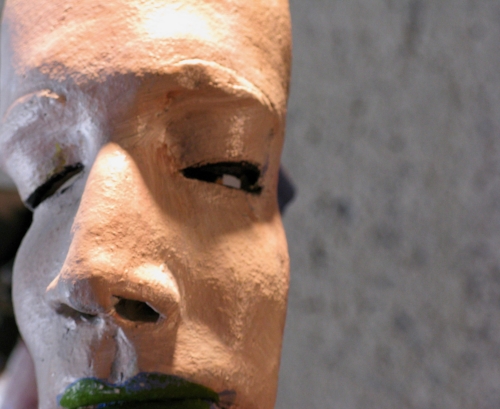
What is it about recognition? Even those of us who think we fly under the social radar want others to remember our names and our faces. And when they don’t, we can’t help but feel diminished, that perhaps we just aren’t all that memorable.
And then there is the flip side, when we try to recall the names and faces of others. Those who are good at this wield tremendous social advantage in personal and business settings. The rest of us try to fake it as best we can.
After a certain age, many people tend to forget names, and some of us were never any good at it. One of the things I always admired about Tracey before her brain re-wired itself was her ability to see you once in the receiving line at Christmas and not see you again until the following Christmas and yet ask, “Did your mother’s ankle surgery come out OK?” On the other hand, I am lucky if I recall your face tomorrow and your name after eight or 10 encounters (after I ask someone else to tell me because I am ashamed that I forgot it — again).
When it comes to names and faces, the care partner doesn’t have the excuse that the person with dementia has and is therefore doubly discomfited. Not only do we have to think for two people, we also have to remember for two people, and that includes your name, your face and where in the world we connected in the past.
Please, if someone — anyone — ever forgets who you are, use those good manners your mother taught you and remind the individual without making a big deal of it. Or better yet, just walk up and say your name so that no one has to be embarrassed. Maybe give a little context to make it easier: “Hi Jim, I’m Bob Whatsit and you and I know each other from the City Club,” is brilliant. While it is entirely possible that he already knows exactly who you are, just give him the benefit of the doubt. Try to remember that it isn’t really about you and whether or not you are memorable; it’s about a disease that leaves two people with one brain between them — if they’re lucky. - Emily
