The Way of the Child
Excerpts from a sermon preached on Oct. 7
St. Alban’s Episcopal Church, Cape Elizabeth, ME
In ancient times, children were the lowest of the low, servants of the servants, and the very last members of society. Like too many children in today’s world, they had no rights, and for many, there was no such thing as an easy childhood. And yet children — both then and now — can be our most poignant and powerful teachers.
Do you remember the 1990s movie “Regarding Henry” starring Harrison Ford? It’s about a New York lawyer who gets shot in the head, bringing his career to a screeching halt and leaving him with both brain damage and the spirit of a child. That’s how I feel most days.
I’m in this aging, adult body, with a brain that is damaged and a spirit that is becoming younger. As a result of dementia, I’m seeing life through the eyes of a child.
I now ride my bike with new enthusiasm, sometimes pretending like I’m on a horse. I explore tidal basins and look at art with the curiosity of a kid. I laugh at silly bathroom jokes; I cry at the drop of dime; I sometimes want my teddy bear; and there are moments when I reach for Emily’s hand or she takes mine, not like a lover, but like a child with her parent.
However, as Jesus once said, "Truly I tell you, unless you become like children, you will never enter the kingdom of heaven.” Sure there are challenges; but honestly, at this stage of my disease, I’m experiencing my relationship with God and the world around me in some new and wonderful ways. In fact, I’m beginning to wonder if dementia has provided me with a shortcut to the kingdom of God.
I have always been grateful for the presence of children in my life. They have been my teachers, my friends, my playmates, and sometimes my soul mates. They are now becoming my guides as I navigate this new terrain, for as Frederick Buechner once observed, “Children live with their hands more open than their fists clenched...they are so relatively unburdened by preconceptions that if somebody says there’s a pot of gold at the end of the rainbow, they are perfectly willing to go take a look for themselves.”
During the early years of my tenure as Dean at Trinity Cathedral in Cleveland, two families from another city in the diocese came to our then relatively new nine o’clock service. One family was Roman Catholic, and they were trying to find a home in the Episcopal Church. I welcomed them to the Cathedral and asked what brought them such a distance. They explained that their daughter had been saying that she wanted to be a priest when she grew up, but she had never seen a woman priest. So they came to see the woman priest and dean of the cathedral in Cleveland. I smiled and introduced myself to this shy girl standing by her parents.
When it came time for communion, I asked my young visitor if she would like to stand with me at the altar. Without hesitation, she responded in the affirmative. And up she came. Then something remarkable happened. As I started to lift my arms to pray, she lifted her arms. When I raised my hands over the bread and wine, she raised her hands. As I celebrated communion, she intensely mimicked every move I made. Another little girl joined her; this one danced around the altar. At the end of the service, both sets of parents told me what an extraordinary gift I had given their children.
After that Sunday, I always invited the children to come up to the altar and help at the nine o’clock service. Then my cathedral clergy colleagues started inviting the children to help them. Within a few months, children at the altar were a custom at Trinity Cathedral, and some kids didn’t even need to be invited. They just came on up. The nine o’clock service was growing, and many people were coming because of the children. Parishioners and visitors alike would comment, “This is remarkable. I feel the intense power of the spirit in the presence of the children at the altar.”
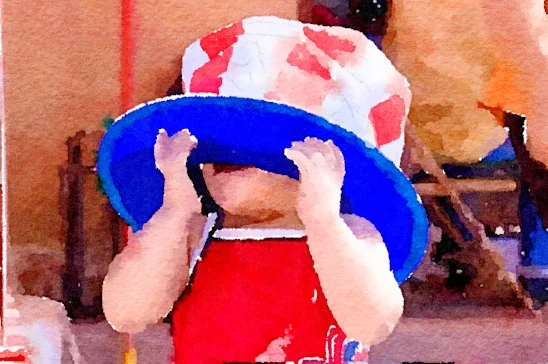
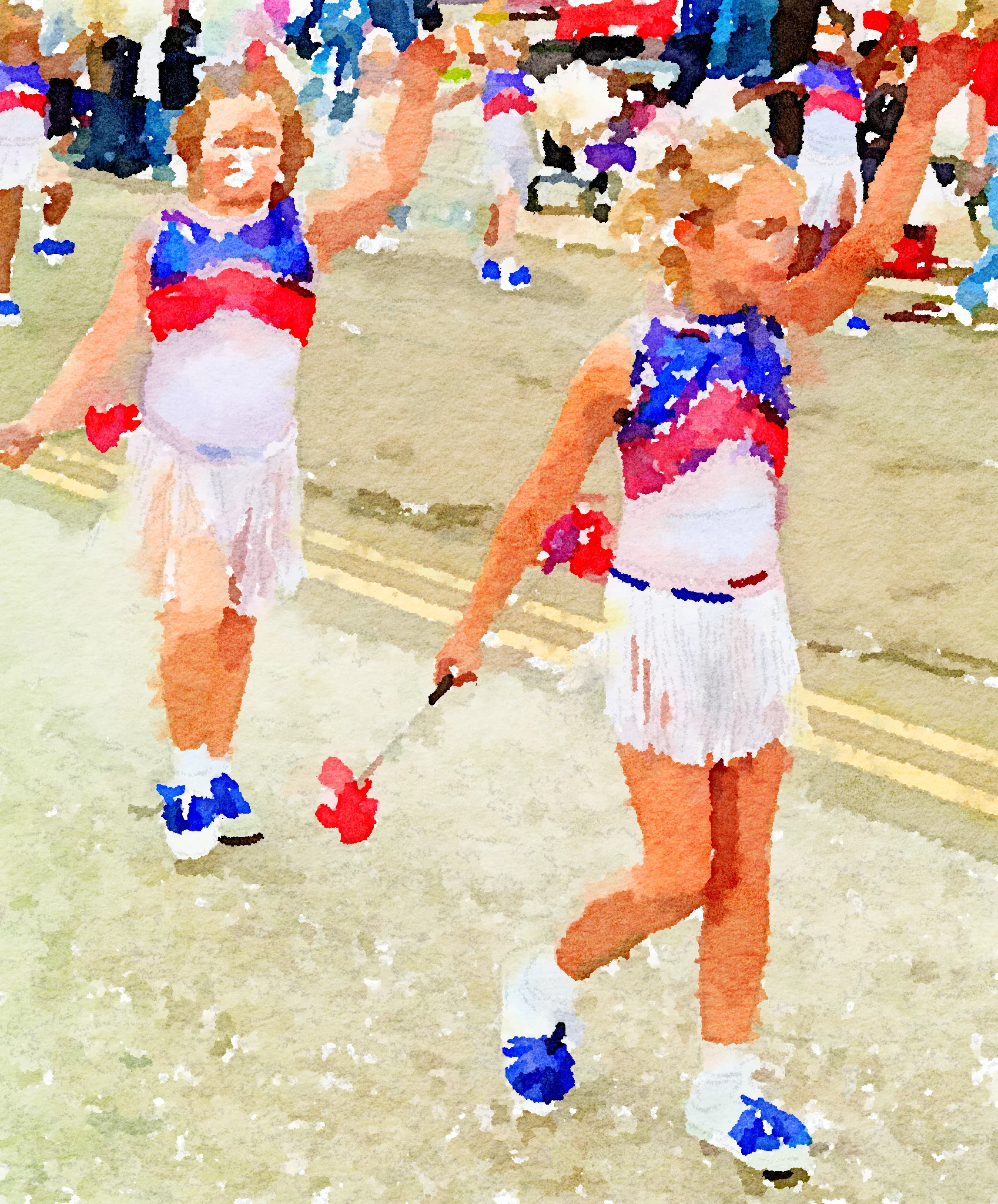
Liturgical dancers, complete with blinking shoes, blessed us. We occasionally had dolls sitting on the altar with their arms and hands held out to bless the bread and wine — what better place for Barbie in her ridiculous fashion or GI Joe in his combat uniform to sit. One young concelebrant even wore a pirate hat to church.
Older siblings lifted younger ones up to reach the altar. Over the years, we had plenty of fingerprints on the altar linens and smudges on the silver but never a complaint from the Altar Guild; frankly, I think that’s a miracle in an Episcopal cathedral. There was usually a little bit of chaos, but always a lot of joy, laughter, tears, and grace at God’s table.
While I don’t know if this liturgical custom will continue in Trinity’s next chapter, I believe that children truly transformed our worship. At the altar on Sunday mornings, the children were the ministers of God’s sacraments. Their hands, eyes, arms, and breath literally blessed the bread and wine and invoked the very presence of Christ in our midst. In their very presence at God’s holy table, they embodied Jesus’ words: “Whoever welcomes one such child in my name welcomes me, and whoever welcomes me welcomes not me but the one who sent me” (Mark 9:36–37).
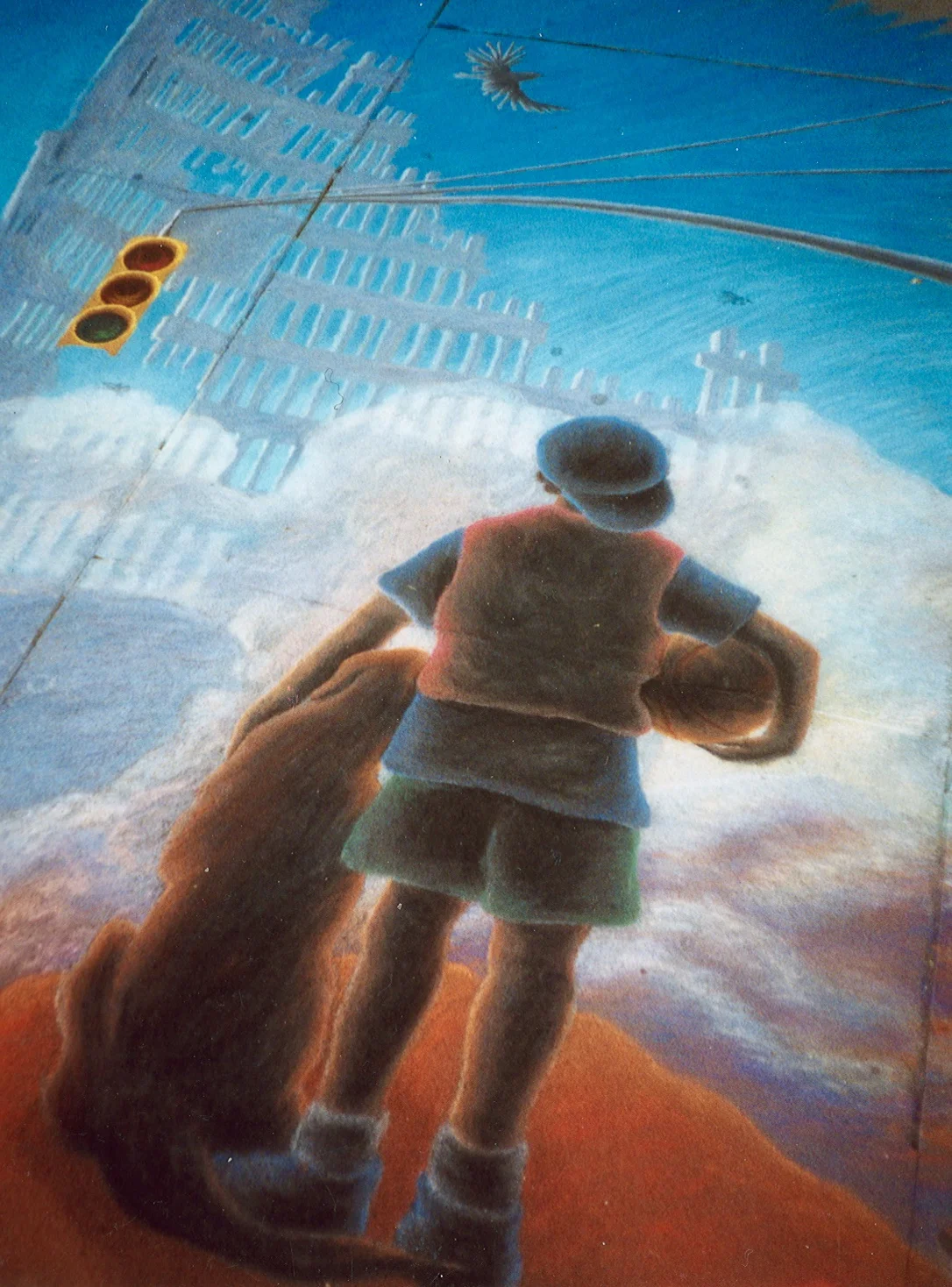
We think that our children don’t pay attention to what is done and said in church. But I know for a fact that they do listen and remember what is proclaimed in both word and deed. I have had parents report to me that their children were playing communion at home with their dolls and stuffed toys. One time, a father called to tell me that his kids had created a new game. It involved going to the kitchen with their wagon and filling it up with canned food. Then they went to the hall closet and put gloves and hats in the wagon. Their parents could not figure out what they were doing. Eventually they asked and were told, “We’re taking food and clothes to the homeless, just like Rev. Tracey told us to do in her sermon.”
Over the years, lots of funny things happened at that service. My favorite kid story of all time is about the little boy who stood on his head during communion one Sunday. I don’t know why he did it, but it was funny. We all laughed, continued with our worship, and thought nothing of it. But that little boy standing on his head at the eucharistic table taught me that the Gospel of Jesus Christ turns the world upside down with humor, passion, justice, and love.
While I would have never, ever wished for dementia, in a strange way, I am profoundly grateful. Dementia has opened up my world in ways beyond my imagination. It has helped me to see the preciousness and uncertainty of life. It has provided Emily and me with a new adventure in togetherness and introduced us to new friends all over the world. It has forced me to slow down and smell the roses. It has humbled me. And, it has called me to what others say might become the most important chapter of my ministry. You see, I’ve decided to view my dementia in a way similar to how the Dalai Lama refers to his exile, as “an opportunity to get closer to life.”
In getting dementia, I received for the second time around the gift of childhood, and with it, the freedom to laugh when I’m taking myself too seriously, to say “Amen” like I mean it, to cry when I hurt, to frown when I’m sad, and to smile when I’m happy, and to sometimes stand on my head in order to see the world from upside down.
Falling Upward
Excerpts from a sermon preached on Sept. 30
The Parish of the Epiphany, Winchester, MA
Many of us live in the Golden Age of Memory. Talk to anybody who grew up in the ‘50s with Ozzie and Harriet, Leave it to Beaver, and Father Knows Best. It was a time when cities had vibrant downtowns and blissful suburbs, forgetting, of course, Jim Crow laws, redlining practices, and real estate covenants that protected such communities from unwanted outsiders. The fact is that nothing is forever, and nothing is all good, including the so-called Golden Age of Memory.
After receiving my diagnosis of Frontotemporal Dementia, I prayed, dear God, let me just ignore the diagnosis and return to life as it had been. That wasn’t successful. I simply couldn’t live as I had before.
I wanted to go back to my good-old days of cathedral ministry and civic leadership without paying the price of working 60-70 hours a week, eating on the run, not getting enough exercise or sleep, and generally being too busy saving the world instead of taking care of me.
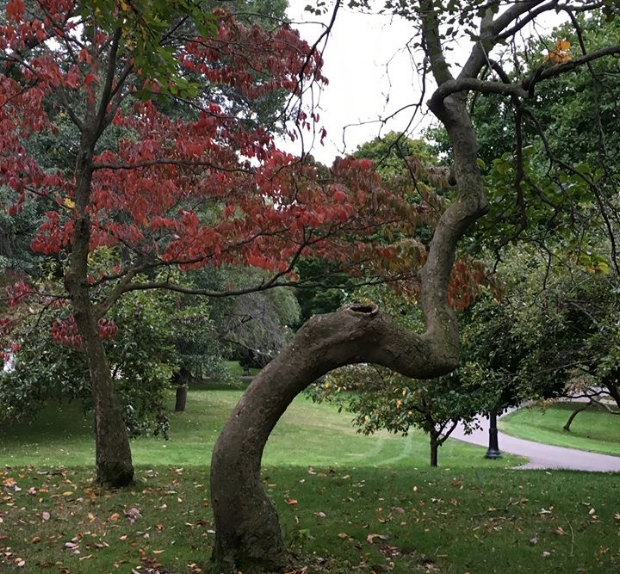
The great wisdom teachers speak of dying to oneself and being reborn, or losing life and finding it anew. Richard Rohr calls this process “falling upward” into the second half of life, discovering what might be described as the fullness of life.
I realize that I’m falling upward – into the fullness of life – with dementia. I have no doubt that I am losing the life I’ve always known. I’m also certain that I’m finding a new one. When I deny the reality of the disease, grieve the lost aspects of my old identity, and resist the emerging aspects of the new me, I get tied up in knots. But when I accept what has died, let go of what has been lost, and celebrate what is being reborn, I start discovering surprising gifts and strengths, a different kind of balance, a new way of living in the world.
While I am praying with hope for a cure to FTD, I’m also asking God for the courage to navigate this journey and face the anticipated course of this disease so that I might live and die with dignity. I’m praying that as my dementia progresses, I won’t lose the essence of who I am, but rather that I will be Tracey until I take my last breath on earth.
You see, the author of the Letter of James was absolutely right: “Prayer is powerful and effective.” We just have to be willing to accept the wisdom of Mick Jagger and Keith Richards: “You can’t always get what you want, but if you try sometimes, you might just find, you get what you need.”
World FTD Awareness Week
Two and a half years ago, I looked in a mirror and didn’t recognize my own face. That was the moment I realized I could no longer ignore the increasingly obvious signs and symptoms that would eventually lead to a diagnosis of Frontotemporal Degeneration (FTD) in November of 2016. Thankfully, an early diagnosis allowed me to exit work gracefully, put our legal and financial affairs in order, and make plans for the future, trying to imagine how I might experience the fullness of life as my dementia progresses.
Today marks the beginning of World FTD Awareness Week, and I want to take the opportunity to tell you what FTD is and how you can help.
FTD represents a group of brain disorders caused by the degeneration of the frontal and/or temporal lobes of the brain. It causes a gradual (although sometimes dramatic) and progressive decline in behavior, language, and/or movement, with long-term memory often intact.
Although rare overall, FTD is the most common cause of dementia for people under the age of 60. In fact, it typically affects those in their 40’s and 50’s, right in the prime of life when individuals are raising families, building careers, and engaging with their communities.
Because it is less common and far less understood, FTD is frequently misdiagnosed as Alzheimer’s, depression, Parkinson’s, or a psychiatric condition. While I was diagnosed very early and fairly quickly, it often takes 3 or more years to get an accurate diagnosis. The disease’s progression varies by individual, but FTD causes an inevitable decline with a life expectancy from 2 to 20 years (an average of 7-13) after the start of symptoms. I’ve always been an outlier, so I’m hoping to be an outlier in the disease’s progression and life expectancy.
At present, there is no cure or treatment for FTD.
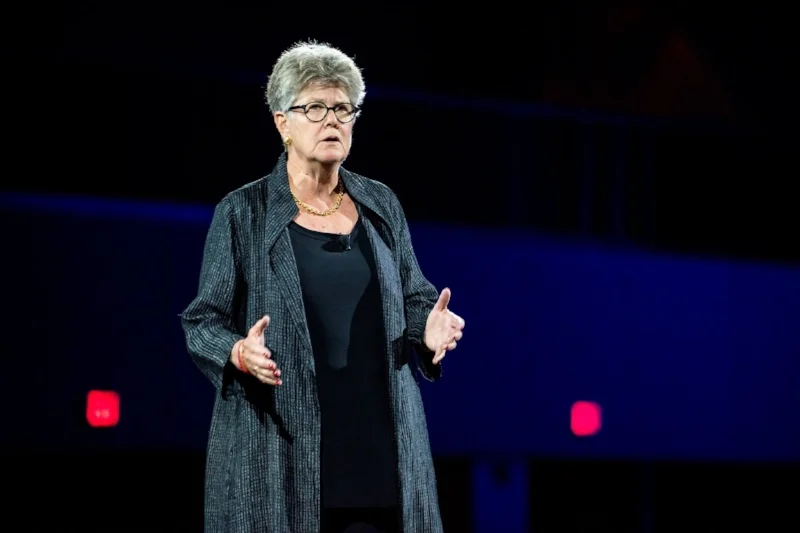
Tracey speaking at the Leading Age PEAK Conference, Great Minds Gala
The Association for Frontotemporal Degeneration (AFTD) is working hard to identify the biomarkers, find a cure, develop treatments and provide support to individuals and families living with the disease. Twenty percent of my speaking honorariums go to support the work of this incredible organization, and you can learn more about it at TheAFTD.org.
You can help fight this disease by in a variety of ways:
Support the work of AFTD with contributions of time and money;
Click here to complete a letter contacting your representatives to urge the passage of The BOLD Infrastructure for Alzheimer’s Act (S.2076 / H.R. 4256);
Call for the inclusion of FTD in dementia funding, treatment, and research;
Make accommodations in work, school and community life for those living with FTD;
Learn the signs and symptoms of FTD and encourage loved ones who appear to be symptomatic to seek help;
Share this post with your friends on social media.
By increasing awareness about FTD, we can accelerate diagnosis, improve care and support options, and foster further research into treatments and a cure. One of the challenges for people living with dementia is that we lose the ability tell our own stories and advocate of our own behalf. That is why, for as long as I am able, I’m determined to preach, teach, and tell my story of dementia from the inside out, in hopes that others will do the same and bring this growing public health crisis out of the shadows and into the light.
A call for hope and urgency
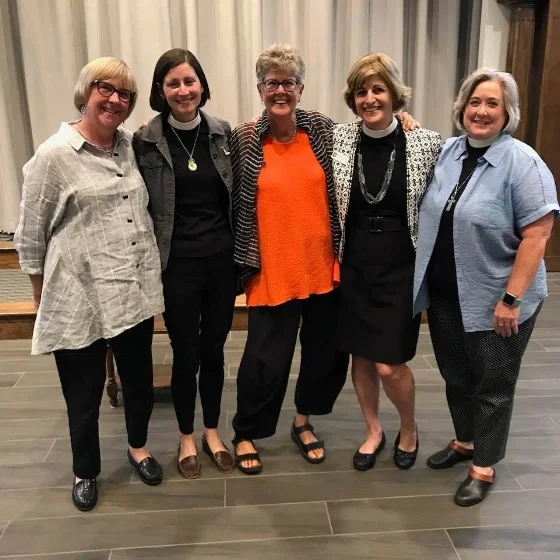
Tracey and Emily join clergy - Danielle Thompson, Mary Béa Sullivan and Jennifer Riddle - in Birmingham, Alabama, on Sept. 18.
Emily and I are spending a week of respite in Cleveland between our travels around the country sharing the lessons we’ve learned from living with early onset dementia. Before heading to Boston, I want to share some upcoming events you may want to attend, as well as an excerpt from my op-ed published in The Plain Dealer on Sept. 2 - On living with dementia - a call for hope and urgency:
Like millions around the globe, I now live with a neurological condition that is not fully understood, and for which there is limited treatment but no cure.
Dementia is in my DNA. My mother, maternal grandfather and two aunts all died with it. I watched my mother and others hide their dementia, ashamed and embarrassed, as if it were a weakness, a punishment, or even a sin. I liken dementia to cancer in the 1960s or AIDS in the 1980s – spoken of in hushed voices with an undercurrent of blaming the victim. If only she had eaten less red meat and more green vegetables; if only he had done a crossword puzzle every morning; if only she had practiced yoga or meditation for the past 10 years; and so on. No wonder people with dementia want to hide it.
I refuse to live with dementia on those terms. For me, denial isn’t useful; honesty is important; early diagnosis can result in a higher quality of life; and transparency makes life easier for everybody involved.
Early diagnosis allowed me to exit work gracefully, put our legal and financial affairs in order, and make plans for the future. It also gives me the opportunity to do what I love and spend time with those whom I love. Honesty affords me the time, space, incentive and willpower to be intentional about self-care, exploring ways to manage and perhaps even slow the progress of my disease. As a pastor and theologian, transparency helps me make sense of dementia: to consider its spirituality, to give it meaning and purpose, and to share my learnings with others.
Dementia doesn’t care about race, creed, income or education; it truly doesn’t discriminate, but access to quality care does. Americans are projected to pay $1 trillion for Alzheimer’s care by 2050. Frankly, I worry that as baby boomers age, if we don’t act, Alzheimer’s and other age-related dementias could bankrupt Medicare and Medicaid, and we will start warehousing those who can’t take care of themselves.
Some 50 million people around the globe have dementia, and it’s expected to grow to more than 130 million by 2050, according to the World Health Organization. Dementia is the 7th leading cause of death in the world, and it’s also the leading cause of disability and dependence among the elderly.
Take action by encouraging your Senators and Representatives to support the BOLD Infrastructure for Alzheimer’s Act. This bipartisan legislation would create systems to advance effective interventions, encourage early dementia detection and diagnosis, prevent avoidable hospitalizations, reduce health disparities, support the needs of caregivers, and offer comprehensive care planning.
You can also act by supporting the Cleveland Walk to End Alzheimer’s on Saturday, Oct. 13. I will be the honorary chairperson for this event and would love to have you walk with us or start a team of your own to help us raise awareness and funding for the public health crisis of dementia. To visit our “Team Tracey” walk page, click here. The services and support of the Alzheimer’s Association are available to anyone affected by any form of dementia.
Another upcoming event you can attend is the City Club of Cleveland “Dementia from the Inside Out” Luncheon Forum on Friday, Nov. 30. I am pleased and honored to be asked to speak on this historic stage, and I hope to see all of my Cleveland friends in the crowd.
Deceiving (and Redeeming) Actions
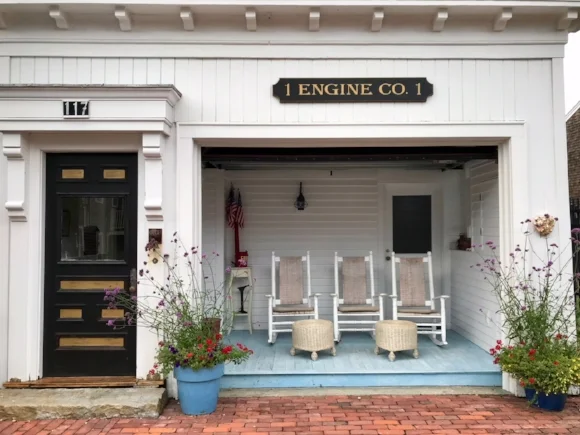
Excerpts from a sermon preached on Sept. 2
The Chapel of St. James the Fisherman, Wellfleet, MA
I once was having lunch with a friend, who remarked that somebody had “Jewed me down” in a business transaction. I was appalled. I hadn’t heard that phrase in years, maybe decades. Without hesitating, I responded with alarm: “You can’t say that.” My friend replied, “Why? It’s true.”
After composing myself, I explained that such a remark was offensive and anti-Semitic. My friend shrugged, and the conversation moved on. Was the impact of this remark understood? Will this interaction make my friend think before speaking in future situations? Will it affect our friendship? I’m not going to write my friend out of my life, and I hope it goes both ways, as this person is dear to me. Ultimately, time will tell. But it was important that I didn’t let this hurtful remark pass, and I pray my friend won’t use it again.
Conversations like that happen all the time. During a recent dinner gathering, Jack Smith, Retired Priest of The Chapel of St. James the Fisherman, suggested a wise, gentle and faithful approach to such a situation. He spoke of sitting with neighbors in front of the liquor store on Main Street in Wellfleet most evenings. Once in a while, one of them will make a cruel and inconsiderate remark. Jack responds: “I know you, and you are better than that.”
I think Jack’s remark might be the best response to our current crisis of civility, decency, compassion, respect and honor. And more often than not, this crisis is undergirded by so-called “religious beliefs.”
I can’t bake your wedding cake or issue your marriage license. I can’t welcome those people into my club, church, neighborhood or country. I can’t acknowledge climate change. I can’t support gun control legislation, reproductive choice or the right to die with dignity. These so-called “religious beliefs” are informed by various interpretations of the Bible and the Constitution, deeply held personal convictions, inherited biases, misinformation and political party loyalty.
What is true religion, and how is it reflected in the way we speak and act?
The author of James answers: If any think they are religious and do not bridle their tongues but deceive their hearts, their religion is worthless. Religion that is pure and undefiled before God is this: to care for orphans and widows in their distress, and to keep oneself unstained by the world.
In other words, it’s not good enough to be hearers or speakers of God’s word; the Word has to be put into action, like caring for the young, the elderly and those in distress and despair. James reminds us that it’s important to protect the vulnerable, rather than attack or scapegoat them, or remain silent as they are attacked and scapegoated by others. James also insists we learn to rein in our words, if they do not promote peace, justice and well-being for all God’s creatures.
In case we’ve missed the point of these sacred texts, Jesus clarifies them in his teaching: “This people honors me with their lips, but their hearts are far from me.” They say they love the God whom they can’t see, but they sure don’t love the neighbor standing right next to them.
When I was a little girl and complained someone had said something mean about me, my grandmother would reply: “Sticks and stones may break your bones, but words will never hurt you.” However, if I said something unkind about someone else, she would remind me that, “Words once spoken are like eggs once broken; they can never be repaired.”
The tongue is a small part of the body, but think of the good or damage we can do with the spoken word.
Silence can be a powerful weapon in nonviolent resistance to oppression. As I reflect on the life of Senator John McCain, many of whose political positions and choices I did not agree with, I can’t help but admire this hero who bore captivity, interrogation and torture in silence, thus frustrating his captors and inspiring fellow prisoners.
Speech is also an essential ingredient in life. In fact, as Jesus demonstrates, sometimes our faith demands that we speak out when it would be a lot easier to remain silent. Silence and speech is a delicate balance.
The bridge between too much talk and utter silence is listening. Only one who has learned how to listen will be able to hear the cry of others, as well as the call of God.
It’s been a long time since my grandmother took me on her knee and whispered her kernels of wisdom into my ear. And while I can still hear her voice, I now know that words alone might not break bones, but they certainly can hurt, especially when they promote and invoke violence, which can and does break more than just bones. I’ve also come to believe that words once spoken, in fact, can be repaired. It takes a lot of effort, time and determination. It demands humility and graciousness of heart. It is at the heart of what we call the work of reconciliation.
May we all listen carefully to hear our God who is still speaking. May we speak our truth with love and graciousness. And when we or someone else who speaks or acts in a manner that feeds the crisis of civility, decency, compassion, respect and honor, let us recall and (when appropriate) repeat Jack’s wise response: “I know you, and you are better than that.”