Building a Dementia Friendly Community

Dear Friends,
People living with dementia and their care partners live in every community in America. They are our neighbors, customers, clients and friends.
They are me and my spouse, Emily Ingalls.
When I was diagnosed with Frontotemporal Degeneration in 2016, our life changed. We were faced with new challenges in living with my illness and managing those changes. We also faced a new reality from the world around us. People treat you differently when you have dementia.
I invite you to join to me for Creating a Dementia Inclusive Cleveland Heights, a virtual program hosted by Benjamin Rose Institute on Aging, on Zoom on September 24 from 9:00AM to 12:00PM.
During the program, Emily and I will share some insights we’ve gained from a life complicated by dementia. We’ll be joined by speakers from local congregations, universities, community organizations and others to help build an understanding of what it means to create a dementia-inclusive community where everyone can live well and thrive.
I hope to see you on September 24.
Tracey Lind
This event is jointly sponsored by Northeast Ohio Medical University and the Heath Resources and Services Administration funded Geriatric Workforce Enhancement Program.
Disclaimer: This webinar is supported by the Health Resources and Services Administration (HRSA) of the U.S. Department of Health and Human Services (HHS) as part of an award totaling $3.7 million with 0 percentage financed with non-governmental sources. The contents are those of the authors and do not necessarily represent the official views of, nor an endorsement, by HRSA, HHS or the U.S. Government.”
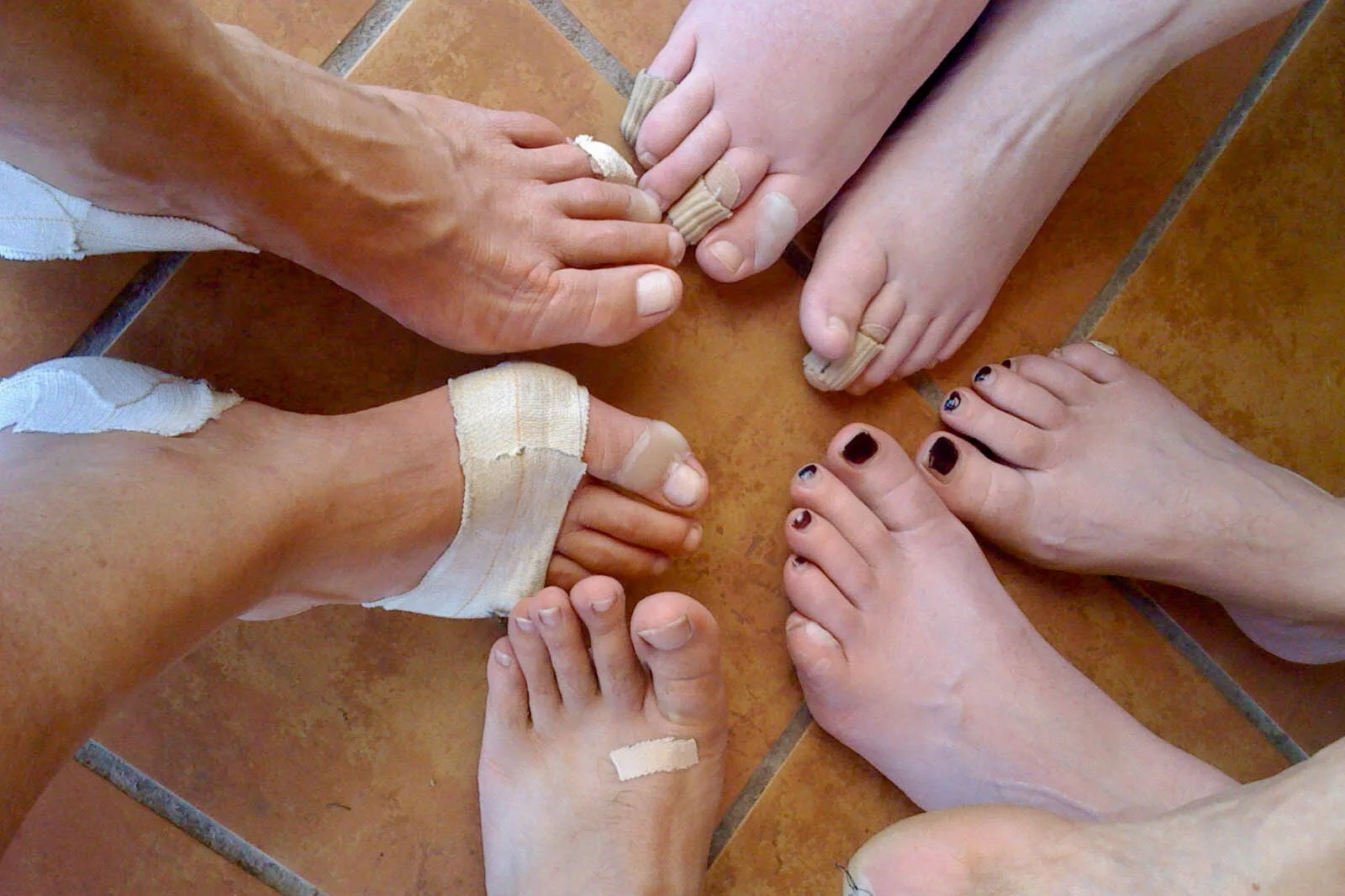
Perhaps It's Time to Take Off Our Shoes
The Opening of Eyes
That day I saw beneath dark clouds
the passing light over the water
and I heard the voice of the world speak out,
I knew then, as I had before
life is no passing memory of what has been
nor the remaining pages in a great book
waiting to be read.
It is the opening of eyes long closed.
It is the vision of far off things
seen for the silence they hold.It is the heart after years
of secret conversing
speaking out loud in the clear air.
It is Moses in the desert
fallen to his knees before the lit bush.
It is the man throwing away his shoes
as if to enter heaven
and finding himself astonished,
opened at last,
fallen in love with solid ground.
— David Whyte, from Songs for Coming Home
David Whyte’s poem “The Opening of Eyes” aptly describes Moses’ encounter at the burning bush. It’s about what happens when “eyes long closed” are opened and “hearts after years of secret conversing speak out loud in clear air.”
The epic tale of Moses is about being interrupted by God, called by name, given a task, feeling unworthy, receiving reassurance. and saying “yes” to what God has in store for your life. It’s about doing the best you can as you lead a people through tidal waters, barren deserts, high mountains, and the wilderness for years on end. Like the rest of us, Moses made mistakes. He resisted, doubted, became angry, and was ready to throw in the towel on more than one occasion. Yet he went on.
The biography of Moses shows us one man’s (and eventually one people’s) journey of faith. Moses, like many of our biblical ancestors, was touched by God in a profound way. He was called to die to his old self and to be reborn to a new life of grace, power and truth. Each person’s story is different; each call is unique. But when God interrupts our life, we find ourselves standing on holy ground.
As a rabbinic student explained to David Whyte, the original Hebrew verb for “take off your shoes” is “shed,” the same verb used for an animal shedding its skin. In reflecting on this word study, Whyte explains that “God says, ‘Shed your shoes,’ just as if it would be a natural process to let it go. And of course when you’re shedding, you don’t look that great for a while, but you’ve just got to go through that lovely humiliation.”
Richard Rohr calls this process of shedding “falling upward” into the second half of life. The first half of life is the container, and the task of the first half of life is to build and fill the container. The second half of life is the contents spilled out, refined, and refilled so that in a simplicity and naiveté--with all its contraction and paradox, with all its pain and mistakes--it is held in what Rohr calls luminous gravitas, a bright sadness.
The second half of life, the one that comes after we’ve shed our shoes, is a sacred dance in which we become who we really are meant to be as a child of God. It happened to me as I sat in a doctor’s office and was told I had the beginnings of dementia. It can happen when you’ve lost a job, a spouse, your health, fortune, reputation, or fame.
The second half of life might also be what’s happening to our nation as we confront a devastating virus, a reckoning with systemic racism, and a time of political and social upheaval. It might even be what’s happening to the entire world as we face environmental disaster, epic migration, and the rise of facism in so many places across the globe.
While these times might feel like an eternity, they are but a millisecond to God. For beneath the dark clouds of turmoil and strife is the passing light over the water.
A new movement is afoot, a movement called “Grounding” or “Earthing.” It’s based on an ancient premise that the earth sends subtle electrical energy that we humans have lost touch with. Thanks to furniture, automobiles, insulated buildings, and shoes with synthetic soles, many of us no longer have daily contact with the earth. Some suggest that our disconnect with the earth has resulted in disease, stress, and chronic body fatigue.
Advocates of the “grounding” or “earthing” movement say that standing barefoot or even lying on the earth every day can serve as a detoxifying, healing force for good. Perhaps that’s why people feel so relaxed after a barefoot day at the beach or having a picnic on the ground.
I invite you, then, to try the experience of grounding for yourself. Take off your shoes and realize that you are standing on holy ground. Lie down on the grass and feel the healing energy of the earth below you. Sit with your back against the trunk of a tree and feel its living wisdom. And as you do, thoughtfully ask yourself:
— How has this COVID interruption changed your life for the good?
— How are you dying to your old life in order to be born anew?
— To what or where are you being called?
On the Beach, Starting Over

Photo by Emily Ingalls
In the early morning fog, the oyster farmers of Wellfleet, Massachusetts, set to work out on the bay. It’s a beautiful sight and a perfect setting to reflect on John 21:1-14, one of the Easter appearances in the Fourth Gospel.
As the story opens, the disciples have come full circle and are back to square one. Three years earlier, Jesus had invited Simon Peter and his fishing buddies to leave their nets behind and become “fishers of people.” Now, after all that has happened, this motley and beleaguered gang are back in Galilee, sitting on the shores of the sea of Tiberius, not knowing what to do with their lives. When Simon Peter says, “I’m going fishing,” they climb in the boat with him.
“I’m going fishing” is one of the great anti-climactic lines in all of literature. It’s like relapsing after a period of sobriety; sliding back into overwork; reverting to bad acquaintances and bad habits; or believing that, sooner or later, life will return to “normal,” back to the way things were before COVID-19 arrived among us.
That’s not the response that Jesus had hoped for from his closest disciples. When he told them, “Go to Galilee; there [you] will see me.” (Mt 28.10), Jesus was talking about resurrection, which is not a circle; it’s more like a slinky. With resurrection, we never end up back from where we started; we always end up in a new place, even if our zip code hasn’t changed.
In a recent blog post, Richard Rohr describes this universal pattern as order, disorder, reorder. Social scientists describe the process as: construction, destruction, reconstruction. I think of it as creation, erosion, restoration.
On the beach that morning, Peter and the other disciples have lost sight of the vision and way of Jesus, which is not surprising given what they had witnessed. First, Jesus had been arrested; then he was tortured and executed; then he appeared to them but left them again. This abrupt turn of events left Peter and the rest of the disciples to wonder, “What’s up with that?”
The apostles gathered on the beach are not “the contented simple fisher folk” we met in the beginning of the Gospel. They feel let down, abandoned, depressed, ashamed, and afraid. Their highest hopes have been dashed. Everything seems to have fallen apart.
Peter feels the worst of them all, for he had denied Jesus in front of the Roman authorities. All he wants now isan escape from his pain, shame, and disappointment, so he says, “I’m going fishing.” Since it appears that there is nothing else to do but to return to the way life had been, the others follow.
However, though they set out as usual, they can’t seem to catch anything. Experienced fishermen in familiar, plentiful waters, this solid crew with a home court advantage can’t catch a darn thing.
Life can be awfully frustrating when you return to your old ways and things don’t go right, when you don’t seem to have the same touch. It’s like putting on an old pair of glasses that you probably should have discarded when you got new ones. But you saved them--just in case. Now, when you put them on, they really don’t fit, and you can’t see very well.

Photo by Herb Elliott
In the gospel narrative, something remarkable, something incredible, happens on the waters that day. A stranger stands on the shore, calling out to them like a good mother, “Children, have you no fish?” Don’t you hate rhetorical questions like that? They are perfectly designed to make you look foolish. Isn’t it obvious that they have no fish?
Jesus — unrecognized by the disciples — instructs them to cast their net to the starboard side, where they will find some fish.
Have you ever been working on a problem that can’t be solved? You can’t see the forest for the trees. Then, somebody comes up and sees the solution from a different perspective, which in hindsight seems so obvious.
I call those “Ah hah!” moments.
That’s what happens to the disciples that morning. On their fishing excursion, they can’t see the fish through the water (so to speak). But when they follow the advice of a stranger who has another perspective, they catch so many fish that they can not even haul in the net.
At that point, Peter recognizes the stranger as Jesus. Why or how? We don’t know. It’s as if he remembers that Jesus had always taught them to look to the other side, to see beyond the obvious, to consider things from a different perspective: blessed are the poor; love your enemies; the first will be last; the one who leads must serve; and if you want to gain your life, you must lose it.
Remembering what he had learned from Jesus, Peter is energized. In fact, he is so invigorated that he dives into the water and swims to shore, leaving his co-workers to drag in the net and row themselves in. Reaching the beach, the disciples find Jesus, still in disguise so as not to be recognized, standing over a fire, grilling fish and bread.
After their hard night at sea, Jesus is there--making breakfast for his beloved friends.
In this simple act, Jesus re-enacts the Eucharistic moment from the Last Supper. He takes bread and gives it to them. They eat and remember. None of them dare to ask Jesus, “Who are you?” They already know.
They have not come full circle after all. And, Jesus is there to meet them – just as they were. Jesus is there with a hot cup of coffee, freshly baked bread, and grilled fish.
What more can you ask for after a hard night of fishing?
In this time of pandemic, we can’t physically gather to bless and share bread and wine around God’s holy table. In fact, we can’t really gather together at all except in small groups outside, six feet apart with our faces masked.
However…
God still comes to meet us at all the tables of our daily lives. God is among us as we make meals with family and friends in quarantine; celebrate birthdays and anniversaries over Zoom; send treats to loved ones in the hospital; grocery shop for neighbors who can’t leave their homes; deliver meals to the sick and shut-in; pack food and load up cars at local pantries; hand out bagged lunches to the homeless on our city sidewalks; and give bottles of water to demonstrators on the streets.
Few among us will have a Sea of Tiberius experience, but all are given the chance to start over in the eyes of God. We all can be a part of the re-ordering, reconstruction, restoration, and resurrection of our lives and the life of our nation and the world. However, we must be willing to consider life from a different perspective and live in a new way — as we throw the net to the other side of the boat.
Crossing to the Other Side

Photo by Tracey Lind
Matthew’s account of Jesus walking on water (Matthew 14.22-33) is a simple story that, like much of the Bible, has several layers of meaning. Jesus told his disciples to “cross to the other side.” They launched the boat, and Jesus went off to pray. Then the waters got rough. The disciples saw Jesus walking on the water across the waves toward the boat and thought him to be a ghost. But Jesus insisted that he was not a figment of their imagination.
When Peter put Jesus to the test, Jesus called Peter’s bluff and invited him into the water. Peter got out of the boat and walked toward Jesus. The wind came up, though, and Peter got scared. He started to sink. With an outstretched arm, Jesus caught him, saying, “You of little faith — why did you doubt?”
I really like this story, especially the opening line: “Jesus made the disciples get into the boat and go on ahead to the other side.” Have you ever been told to go to “the other side,” to take a risk, to leave your comfort zone, or to experience life from another perspective?
That is precisely what Jesus asked his disciples to do. He told them to cross the water, to journey to a foreign land, an unfamiliar place. He also sent them alone, promising to meet them on the other side.
That, my friends, is what’s happening to many of us now.
Together, the COVID pandemic, the economic crisis, and the socio-political upheaval of our times are challenging us to go to “the other side,” with the promise that God will be with us on what seems like a dangerous crossing and will meet us on what might feel like a distant shore.
Significant crossings are difficult and fraught with danger and challenge. When we cross to “the other side,” we may encounter external danger, but the real danger is that we are confronted with our true nature, facing directly into our own fears and moving through them, not around them.
That’s what the Black Lives Matter movement is about for white people. We are called to go to “the other side” and acknowledge our whiteness and our white privilege, to face the systemic, structural racism we have imposed upon our brothers and sisters of color. And in facing both our white privilege and our nation’s systemic racism, we are called to confront not only the hate, bias, inequities, danger, and pain that black and brown people have faced in a racist society but also the internal racism that we hold in our bodies and souls.
The Black Lives Matter movement calls white people to face our own demons.
When we cross to the other side, we journey like a submarine down into the deep water toward the confusion, chaos, and doubt of our brokenness. Yet in such crossings, we discover our wounds enveloped by the healing waters of compassion. In the depths of our internal doubts and fears, we find the love that will not disappear or die.
Isn’t that what’s happening during the journey of these days as we face confusion, chaos, doubt, and fear?
In Matthew’s story of crossing to “the other side,” there are lots of wind and waves. This seems so appropriate for our times because we are indeed sailing in very stormy and rough waters. Like many of you, there’s a part of me that is frightened. I fear getting COVID or giving it to someone I love. I worry about the economy, the food supply, and the environment. I’m concerned for the future of organized religion, education, small business, art, and music. And I am scared of a president who seems out of touch and out of control.
However, though I’m frightened for our nation and for the rest of the world, I’m also hopeful. It’s as if we’re on the precipice of something new and exciting. I believe that we are poised in a moment of reset, re-calibration, and re-alignment, standing on the edge of a new beginning. This crossing--as painful and frightening as it has been, still is, and will continue to be in the coming days--is nonetheless essential for human wellbeing, perhaps even for the survival of our world.
A new world is being created in the rough waters of this time of pandemic and upheaval. God is inviting us not only to cross to the other side but also to get out of the boat and wade into the troubled and scary waters.
I ask you, then, to think about how you might offer hope to this frightened world. How might you be a sign of God’s promise? How might you demonstrate in word and action that you are a person of faith--faith in the goodness of creation, faith in the beloved community, and faith that when we walk with God in justice, kindness, and humility, together we can do more than we could ever imagine?
Seize this moment as a gift to be shared, knowing that in God life is understood and makes sense; that your life is accepted with all of its hope, all of its promise, and all of its challenge; and that you have the courage to face whatever you have to face, today, tomorrow, and then some.
From Scarcity to Abundance
Matthew’s account of the Feeding of the Multitudes (Mt 14:13-21) is one of my favorite Bible stories. This episode in Jesus’ ministry teaches us to take what we have, give thanks to God for it, divide it among the gathered community, and discover that there is always enough to go around. In fact, there will be more than enough — leftovers for those who don’t make it to the table.
What is commonly called “the miracle of the loaves and fish” can be compared to a potluck, only much more. The teachings are the same: the combination of community, sharing, and faith leading us from scarcity to abundance. In some ways, that is the very essence of Christianity.
Potlucks can take place only in a community. They can’t happen alone. They are, by their very nature, a community event. Certainly, there will be private moments in a Christian life, but for the most part, our Christian living takes place in the context of community. The community takes what we have to offer, and the community gives back what we need.
Potlucks are about sharing. The miracle of the story of the loaves and fish is that by his own behavior Jesus taught people to share what they had, and there was enough. Think about how he orchestrated the feast. He told the crowd to sit down on the grass. Then, he took what he had (actually what the disciples had), looked up to heaven, blessed it, broke it, and gave it to the disciples to distribute among the people.
Here’s what I think happened. When the disciples began distributing what they had to offer, others came forward to share what they had to offer. Surely some of the 5000 people gathered had brought a basket or sack of food with them; some of them were probably on the way to and from the market. Others probably had a piece of bread, cheese, or fruit in their satchels. In those days, few people left home for a day in the countryside without something to eat. It would have been foolish to leave home so unprepared. After all, there were no McDonald’s restaurants on the highway.
So when Jesus lifted up his food to God and instructed the disciples to pass it among the crowd, people came forward with their offerings. “I have a little cheese; I have a loaf of bread; I have an orange; I have a bit of wine – let me share this as well.” And when the people shared, there was enough to eat, and there were leftovers.
Potlucks are about having faith that when we share what we have with the community, there will be enough. Once again, it is the principle of abundance versus scarcity: a radical, deviant, creative principle that if practiced can change both individual and collective life on this earth. The story of the bread and the fish summarizes one of the most essential teachings of our Lord. That’s why it’s found in all four gospels!
When Jesus lifted the bread and fish up to ask for God’s blessing upon it, he was taking a risk. He didn’t know for certain if there would be enough. However, he had faith that there would be enough. That’s what it’s all about: faith that there will be enough--enough food for the meal, enough money for the budget, enough time for the project, enough of whatever we need to fulfill our obligations to ourselves, our families, our communities, our world, and our God.
And here’s the kicker, the punch line. Jesus always asks more of us than we think we have to give: more love to offer when we’re running on empty; more tests to take when we’re exhausted; more mouths to feed when the pantry shelves are bare; more bills to pay when the checking account is empty.
Bring to me what you have, Jesus says. Bring me your skills and weaknesses; your strengths and fears; your burdens, challenges, and responsibilities; your hopes, dreams, and convictions; your past, present, and future. Bring it all to me, and I will make you adequate. I will make you enough for whatever you have to face, today tomorrow, and then some.
Like many during this pandemic, I miss eating with others. While I am profoundly grateful that I have enough to eat, a safe place to eat, and a loving partner with whom to eat, I miss eating breakfast and chatting with neighbors at my local diner. I miss catching up with colleagues over a leisurely lunch. I miss gathering family and friends together at dinner parties. I also miss potlucks, especially church potlucks, complete with jello molds, potato salad, and fried chicken.
And I miss the Eucharist, blessing and sharing bread and wine with people with whom I might not otherwise dine at a breakfast, lunch, or dinner table.
Reading again one of my favorite Bible stories this week, I remembered all those times around the table. As I long for the day when we can re-gather, I renew my vow to share my time, talent, and treasure with others, believing Jesus when he says there is more than enough of me and you and our collective resources to go around, believing his promise that if we will share what we have, not only will there be enough, there will be leftovers.
May it be so!